Image Map
Showing posts with label Writing. Show all posts

Friday, February 27, 2015

Why You Should Post Your Novel on Wattpad

This might be news to some of you who don't follow me on social media, but I just started posting my novel to Wattpad. It's called BLOOD AND WATER, and it's about a 17 year-old named Jay Harris who is living in the midst of a deadly pandemic. It's the first time I've posted a work-in-progress to Wattpad. When I started, I wasn't sure what to expect, but now, I adore it.

Open Laptop with Headphones and a Notebook


Let me tell you why you should post your novel to Wattpad: whether it's finished or not, it's a great way to get free feedback on your writing. Wattpad is an active community filled with tons of people who love engaging with writers. If you're worried about receiving criticism, you can relax - the majority of comments made on the site are overwhelmingly positive. Speaking from personal experience, it's tough to run into someone who's outright rude or disrespectful.

Another great thing about posting your novel on Wattpad is that it motivates you to keep writing. When readers are asking for your next update, you feel compelled to write it. If I fall behind schedule with updates, I feel like I'm letting my readers down. That feeling motivates me to keep going and to post as soon as possible. Also, there's something addictive about getting feedback for each chapter. The potential for engagement keeps me posting chapters, too.

"But Briana," you say, "I can't post my first draft on the Internet!" Well, why not? If it's because the prose isn't perfect, don't worry about it. Like I said before, the Wattpad community is incredibly positive. Moreover, putting up your first draft gives readers a peek into the writing process. A lot of people believe the prose is polished right when it flows out. When you post your rough draft, you're showing everyone how much work it takes to turn the coal into a diamond. You're letting them in on a secret. They'll love you more for it.

"Okay, but what if somebody steals what I've written?" I understand this concern because it's one I also struggled with when I started posting; however, the reality is that stealing is highly unlikely. I'm not saying it's impossible, but it's hardly ever done. The same philosophy that applies to publishing applies to Wattpad, too - most people would rather come up with their own ideas than steal someone else's and risk confrontation.

As you can see, I've learned a lot from posting on Wattpad. Sometimes I doubt my decision, but on the whole, I'm happy with it. If you're considering posting your novel to Wattpad, go ahead and take the plunge. I don't think you'll regret it.

Feel free to follow me on Wattpad - I almost always follow back! :)

What do you think about Wattpad? What's keeping you from posting your novel online? Leave your thoughts and answers in the comments below.

Tweet tweet:
Have you thought about posting your novel on @Wattpad? @brianawrites has a few reasons you should. (Click to tweet)
The @Wattpad community is amazing. Read why @brianawrites thinks you should get involved. (Click to tweet)

Friday, January 23, 2015

Why I Won't Stick to Scrivener

Woman Typing on Vintage Typewriter
Photo Credit: Lívia Cristina on Flickr
Earlier this week, I was telling my friend Rae that I was trying to get into the hang of using Scrivener when she mentioned that she didn't use it. I feel like every other writer I meet uses Scrivener, so I was taken aback. Put simply, Rae prefers simplicity. She can't resist the shiny lure of Scrivener's buttons and folders, so she doesn't write there. It makes sense.

Of course, the conversation got me thinking: why was I even using Scrivener? I've never had any real issues with Word. Sure, it lags with some of my longer documents, but I can deal with that. Like I said, a lot of writers I know love Scrivener. Maybe their influence led me to purchase the product? I'm not blaming anyone for my decision, but I'm interested in finding out why I thought I had to have it.

I still don't know anything about Scrivener. I've been trying to use it for months, but I haven't been able to make it work for me. Like Rae said, there are too many distractions. I spend more time moving folders around and clicking things than actually writing, which is a problem.

Author Ksenia Anske (she's FANTASTIC) just sticks to plain old Word. She's found what works for her, so why change anything? Sometimes simplest is best.

Writer Stephen Moran expressed a similar sentiment to me the other day when we were talking about computers. I mentioned wanting a Mac so that I could take advantage of iMovie. He told me that he had a Mac for the longest time and loved it, but he seldom used it for writing. Now that he has a basic PC, he gets much more work done (check out my review of his novel ELLA here - it's an excellent book).

I'm not telling you to uninstall Scrivener. If you're using it to write and it works for you, great. I just don't want you to think you have to stick to something because it's what everyone else uses. When it comes to achieving success as a writer, your best bet is to do whatever best suits you. For me, that means writing in Microsoft Word, outlining on index cards, and printing the MS before I read through it. That's what works for me. I hope you find what works for you.

What do you think? How do you feel about writing software? What programs or technologies do you use to write?

Tweet tweet:
Don't feel guilty for not using Scrivener, says @brianawrites. (Click to tweet)
According to @brianawrites, when it comes to writing, you should stick with what works for you. (Click to tweet)

Wednesday, January 21, 2015

How to Blog When You're Busy

Busy City Street
Photo Credit: Matthias Rhomberg on Flickr
As someone with a full-time job and a lot of errands to run, I understand how difficult it can be to blog when you're busy.

If blogging is important to you, a loaded schedule can be frustrating. You want to post consistently (the most important part of blogging), but you just don't have the time. "If only there were a few more hours in a day," I can almost hear you say. Well, that's where I might be able to help.

Based on my personal experience, I've compiled a list of tips on how to blog when you're busy.

  • Go for quality over quantity. When you're busy, remind yourself it's okay to keep blog posts short. After all, the average person isn't going to want to invest more than ten minutes reading any given article. People like short and sweet. As long as you're posting regularly, you can get away with writing articles between 250 and 500 words. Save the long posts for weekend writing... which brings me to my next point.
  • Write your posts ahead of time. Regardless of your posting frequency (I do three blog entries per week), the easiest way to update your blog every week is to compose your posts on the weekends and schedule them to go live while you're at school or work. That's what I do with about 80% of my posts. If you want to interact and share your blogs on social media, do that in real time. But schedule the posting. It helps more than you think.
  • Focus on being helpful and informative, not on crafting viral content. If you set out to write the *perfect* blog post, you're going to let yourself down. Instead of getting discouraged, be careful not to let the perfect be the enemy of the good. As a blogger, you should strive to educate or help other people in some way, not to create something gimmicky that might just go viral (spoiler: you can't make something go viral; it happens organically). People reading your blog want to gain some kind of insight from it. That's why they're there.

Running a blog when you've already got a full plate may seem daunting, but it can be done. I've managed to keep this blog active through college, retail jobs, and my current full-time work. It hasn't always been easy, but it has been rewarding. Give these tips a try and see what happens.

What tips do you have for blogging on a busy schedule?

Tweet tweet:
You can still blog on a busy schedule! @brianawrites tells you how. (Click to tweet
Want to blog but don't have time? @brianawrites shares some helpful tips. (Click to tweet)

Tuesday, June 17, 2014

Coffee Shop Etiquette for Writers

[caption id="attachment_2763" align="alignright" width="300"]Cup of Coffee Photo credit: Zach Inglis on Flickr[/caption]

I love writing in Barnes & Noble.


There's a big one in my hometown with a little Starbucks in it and I love to sit down there and get some work done. There's nothing like being surrounded by books and inhaling the scent of fresh roasted coffee while pounding away on my laptop.


I spend so much time in coffee shops that I've noticed an unspoken code of behavior for working from a coffice (coffee shop office).  If you like working in coffee shops, there are a few rules you should follow.


Share Your Space


Stick to the one chair per customer rule. Your butt gets a chair. Put your stuff on the floor. Don't hog the seats. Also, if you're sitting at a table and the coffee shop is busy, don't spread your stuff out all over the place. Share the table. Basic stuff.


Buy Something!


If you're sitting in a coffee shop, you're a customer. It's your duty to purchase something. You should be buying a drink or snack every ninety minutes to two hours. If you don't want to buy anything, try to keep your visit to an hour or less - just know that you're disrespectful for using the space without giving back,


Be Kind to Other Customers and Workers


Most coffee shops have tip jars. I encourage you to use them, especially if you spend a lot of time in that particular location. If someone asks you to watch their stuff, watch their stuff. If you need to listen to something, bring headphones. Take calls outside. Don't hog power outlets. Here's a bright idea - bring your own power strip and make some new friends.


When it comes to writing in coffee shops, these are some simple rules for human behavior to follow. It all boils down to this: don't be a jerk.


Do you like writing in coffee shops? What are some other unspoken rules for working there that you can think of?


Tweet tweet:


The key to coffee shop etiquette for writers? Writer @thecollegenov says, "Don't be a jerk." (Click to tweet)


Monday, June 16, 2014

Watch Your Mouth: Tips for Writing Profanity

[caption id="attachment_2785" align="alignright" width="300"]Photo credit: Christian Bucad on Flickr Photo credit: Christian Bucad on Flickr[/caption]

Many writers worry about putting swear words in their writing. For one reason or another, I’ve had several people tell me that they want to keep curse words out of characters’ dialogue. I believe in using profanity, but only when it’s needed. Cursing works well if it’s done correctly. Check out these tips for writing swear words without going overboard.


Moderation is Key


I can’t tell you how many times I’ve heard someone say, “I enjoyed reading the book, but there was too much profanity. It was distracting.” When it comes to using swears, a little goes a long way. When every other word sounds like sailor speak, you’ve ventured into dangerous territory. Try to use profanity only when it feels absolutely necessary.


Diction Reveals Character


The words that your characters use say a great deal about them. If a character would swear, let him swear; if not, you shouldn’t force it. In one of my short stories, a woman preaches against profanity and disciplines her son whenever he uses “off-limits words.” However, when the woman finds out that her husband is missing in action, she is so shocked that she curses: “You’re shitting me… what the hell does ‘missing’ mean?” In this example, the shift in diction shows the woman’s inner turmoil.


Consider Your Audience


You should probably steer clear of using foul language if you’re writing a novel for the Christian fiction market. Likewise, if you’re writing YA, make sure you’re aware of profanity guidelines. For example, words like f***, g*d***, c***, and m*****f***** are hot-button swears that a lot of YA publishers would prefer not to see. Also, just so we’re clear, Go the F*** to Sleep, is not actually a children’s book (though it is hilarious).


When in Doubt, Take It Out


If you don’t get the warm fuzzies reading something you’ve written, make some cuts. Most likely, your work won’t suffer if you take out some bad words.


You’re more than welcome to use profanity in your writing. Don’t let anyone tell you otherwise. The key is making sure you don’t use them excessively. Keep these ideas in mind the next time you write swearing and you should be good to go.


How do you feel about reading profanity? What about writing it?


Tweet tweet:


Afraid your swearing will scare off readers? Writer @thecollegenov has some advice about profanity. (Click to tweet)


Monday, June 9, 2014

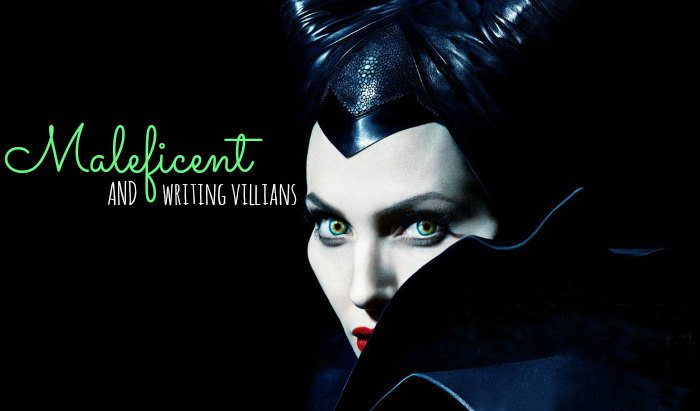
Maleficent and Writing Villains

maleficent-watch-first-trailer-movie-angelina-jolie

The other day my mother and I went to see Maleficent. In spite of not knowing much about the film going in, she and I both thoroughly enjoyed it. From the cinematography to the makeup to the characters themselves, everything was wonderful.


What captured my attention most of all was Maleficent.


Why?


Because she was portrayed as a sympathetic character rather than a one-dimensional villain.


I'll refrain from spoiling as much as I can. All you need to know is that in this version of the classic tale, we get much more of Maleficent's backstory. We see her as a young faerie and learn about the events that have hardened her heart. It is easier for us to understand her (otherwise questionable) actions because we know her past experiences and have a better sense of her wants and motivations.


Most importantly, Maleficent is dynamic. At the end of the film, she is a different woman than she is toward the beginning. Once again, I don't want to spoil, so that's all I'm going to say about that.


Maleficent was delightful, refreshing, and entertaining. While watching the film, I also learned a great deal about writing likable and three-dimensional villains. Whenever you want to add depth to your baddies, make sure they have a backstory, clear motive for what they do, and some kind of arc.


If the villain hasn't been changed by the events of the story, then what is the point for the story at all?


Have you seen the movie? What did you think? What do you think is the key to creating quality villains?


P.S. The 4 "A"s of Characterization, How to Develop Stronger Characters, and How to Get into Your Characters' Heads.

Friday, June 6, 2014

Twitter for Writers

Tweet Tweet

Twitter is one of the greatest under-utilized resources for writers at the moment. It's a great way to promote your work, communicate with other writers, find some writing advice, and have a fantastic time. I only recently started spending some serious time on Twitter, and I could kick myself for not using it sooner.


So why should you set up a Twitter account?


Well, this social media platform is a spectacular way to get your name out there and build up a following. You can promote your work, support other writers who want to promote their work, and link to content that you think other people might find interesting. I promote my blog posts and freelance work through Twitter and it's gotten me a lot more exposure than I would've gotten otherwise.


Twitter is also a great place to get in touch with other writers. I've met so many wonderful people on Twitter, most of them writers. They support my work and I support theirs. We talk about all things writing and non-writing. If you're not currently involved with groups of other writers, Twitter is the best way to meet like-minded individuals. Whenever I interact with other writers on the site, I feel as though there is a sense of community.


Another good reason to use Twitter? Writing advice. Seriously. There are so many amazing tips that get passed around for free. All you have to do is type "writing tips" or "writing advice" into the search bar and millions of helpful Tweets will pop up. The internet is truly a glorious place.


If you don't have a Twitter account, you need to sign up. If you already have one, you should be using it more. And you should definitely be following other writers (*ahem* ME). Tell me you followed me over from this blog and I will most likely follow you back.


What do you think of Twitter? How does it help you as a writer?


P.S Avoid Distractions While Writing.

Wednesday, May 28, 2014

Book Review: The Successful Novelist by David Morrell

Image

David Morrell is a genius.


There's no getting around that fact. After reading this book, I am more than convinced that this man has more writing talent in his pinky than I do in my whole body.


I digress.


When I mentioned on Twitter that Stephen King's On Writing is one of the most influential books about writing that I have ever read, someone suggested that I look up David Morrell's book The Successful Novelist: A Lifetime of Lessons about Writing and Publishing.


I'm delighted I did.


This book, like King's, provides a veritable treasure trove of knowledge regarding the craft and the business of writing. However, Morrell takes a much more practical approach, giving out advice for you to use in your daily writing sessions. King's book is largely memoir with some practical bits sprinkled in. On the whole, Morrell seems so much more approachable.


The Successful Novelist is suitable for writers of all skill levels. Whether you're just starting out or you've been writing for ages, this book is for you.


It's also short, succinct, and easy to read and understand. What more could you want?


Go out and pick up your copy today. This book will change your life.


Have you read this book? What did you think of it? What book would you like to see me review next?


P.S. Book Review: Adulting by Kelly Williams Brown.

Friday, May 23, 2014

3 Types of Scenes to Cut from Your WIP

Upturned Silhouetted Profile Against a Blue-Green Background


It never ceases to amaze me how much bad writing there is in the world.


Truly, when you think about it, you can most likely remember more poorly-written books you've read than well-written ones. Why is that? Bad prose tends to stick in our memory. Think of it as a kind of gruesome car accident--you know you shouldn't watch it, but you can't look away.


Bad writing is almost predictable in its awfulness. That is, there are several contributing factors to a poorly-written piece that can be seen almost across the board.


If you want to avoid bad writing, you need to avoid the factors that contribute to bad writing. One way you can do that is by cutting these scenes.


1. Mirror Scenes


Nothing in prose irritates me more than getting character description from a reflection. Most of the time, these scenes consist of a character peering into the nearest reflective surface--whether it be a mirror or a lake or even a spoon--and commenting on his or her appearance as though noticing it for the first time. How many times do you look in the mirror and look yourself over from head to toe, noting your "caramel-colored eyes" or "luscious red curls." Probably never. Honestly,there are better ways to reveal a character's appearance.


2. Dream Sequences


Oh, goodness. Dream sequences, for me, are right up there with mirror scenes. The only difference is that, unlike a mirror scene, a well-written dream sequence can serve the plot. For example, in Veronica Roth's Divergent, dreams form an integral part of the story. Unfortunately not all dream sequences are created equal. I've seen authors slip in dreams seemingly only for the sake of making word count. Don't do that. If you're going to use a dream, make sure it's relevant to what's going in in your story.


3. Commonplace Exchanges


I once read a novel in which a whole chapter was spent chronicling a trip to the grocery store. I wish I were kidding. If your scene or chapter doesn't reveal character or move the plot along, you're better off without it. No one wants to watch your protagonist picking out produce. We do that enough in our own lives as it is.


These are just three types of scenes that can be removed for the sake of strengthening your piece. I know there are others, but these cover most of the big-picture problems.


What types of scenes do you cut from your work? Do you agree with these three?


P.S. The Art (Not Science) of Chapter BreaksAvoiding Genre Fixation, From Daily Writing Tips: 34 Writing Tips That Will Make You a Better Writer, and Said Isn't Dead.

Monday, May 19, 2014

Time Limit versus Word Count

Typewriter Sitting in the Middle of a Field

As writers, daily writing is absolutely vital to our success as artists.


I've discussed the merits and strategies of daily writing before. There's not much sense doing it again.


Instead, I'm going to share my new outlook on daily writing with you: focus on writing for a set period of time each day rather than a specific word count.


Why? Because it works.


I used to believe in making word count every day. The number varied from 500 to 2000 words, depending on my project at the time, and I made sure to reach that word count no matter what happened each day.


Or at least, I tried to.


The problem with writing to reach a certain word count is that life happens. For people like Stephen King, whose entire lives revolve around and are dedicated to the craft of writing, it's easy to sit down and pound out 2000 words or more each day. For the common man or woman, however, this feat is far from easy.


I now write for half an hour each and every day. I don't necessarily have to add anything new to my manuscript, but that time must be spent doing something related to my current project. For example, if I'm busy, I might spend this half an hour working on my characters or doing some research. That way, I'm still getting work done, but I'm not killing myself over it. I'm not stressing out about reaching some number.


Time limits are flexible. Time limits understand. Time limits help you focus without losing your mind; allowing you to write without taking away the fun of writing.


If you're feeling overworked, why not drop the word count? Try setting a timer for thirty minutes instead.


What do you think about writing for a set time? What are your thoughts on reaching word count?


P.S. The Kurosawa Guide to Daily Writing, The Importance of Daily Writing, Finding Time to Write, and The Beginner's Guide to Daily Writing.

Friday, May 16, 2014

11 Steps to Crafting Characters

Woman Writing on Laptop

I hate character profiles.


Don't get me wrong; I understand their value, I just don't feel like I have the time to fill out every single detail laid out on the page. Is everything relevant to what I'm working on? I don't think so.


If you're anything like me, you wish there were some way to create realistic characters without going overboard. If you'd rather not wax poetic about your protagonist's shoe size or most embarrassing nightmares, all is not lost.


Want to make your characters stand out from the page? All you have to do is follow these eleven simple steps.


  1. What role will this character play? Protagonist, antagonist, love interest, what?

  2. What is their name? Nickname?

  3. Where are they from?

  4. Gender?

  5. Age?

  6. What's their background? Family history, wealth, significant life events?

  7. Race/ethnicity?

  8. Sexuality?

  9. Personality? Good and bad qualities?

  10. Likes and dislikes?

  11. Goals/hopes and fears?


You don't need a complicated spreadsheet to make a three-dimensional character. Ask yourself these questions, answer them, and you should be good to go.


What tips and advice do you have for creating believable characters? What do you think of these tips?


P.S. 4 "A"s of Characterization, How to Develop Stronger Characters, and Where to Find Character Names.

Saturday, May 3, 2014

Lovely Links 05.04.14 - 05.10.14

 Journal Sitting on Couch


This past week was pretty hectic. I'm trying to finish everything I have to do for finals and prepare for graduation (which is Saturday, May 10!), and I've almost forgotten it's time for another Lovely Links post. In honor of my graduation, you get five more links than usual:


Go forth and learn, my friends!


Side note: I am currently in the market for freelance clients. Let me know if you've been searching for a writer! If you'd like to see my work, check out the portfolio link at the top of the blog.

Sunday, April 27, 2014

In Conversation with - Bob Gale, Co-Writer of Back to the Future

[caption id="attachment_2575" align="alignnone" width="640"]Via: Flickr Via: Flickr[/caption]

Back to the Future is one of my favorite movies. This is due not just to the fact that I love eighties films, but also to the acting, directing, and most importantly, the writing. One of the best interviews I've read was a conversation with Bob Gale, one of the co-writers of Back to the Future. I'd like to share a little bit of the interview with you.


What do you think about theories on how to write?
First and foremost – don’t let anyone tell you they have a ‘method’ for making a story into a success. Nobody does, and if anyone says they do, they are lying. There is no magic formula, and mercifully, there never will be. If there was such a method, there would be no bad stories, and I don’t think that’s the case now, is it?! All you can ever do as a writer is write your own story your way. Master your craft, of course, by reading stories, and learn from what other writers say about what worked for them, and from teachers about story theory. The information you can get this way is all interesting, and adds to your personal ability, but you must accept all these opinions only for what they can do in helping you to establish for yourself a working method that works for you.


Remember, even with a formula or rule book that seems incredibly convincing or appears to be globally accepted, all that’s happening is that someone is giving their opinion; and often that someone hasn’t actually had any success themselves. Formal learning is only useful if it helps you to find your own voice and establish your own personal method. Your rules are the only ones that really matter for your story.


Do you consider story structure in your own development process?
No. Of all the magic ‘how to write’ methods, I specifically don’t agree with any that are based around story structure. Structure is not a good starting point for a creative process. Stories develop around characters and their behaviours, learning and growth. Structure results from this development. Of course, structure does exist at the scene level, and as you write your scenes, your story will gain a structure under the surface, but it’s not a starting point for development. People talk about acts and how they must deliver the story in three acts or five acts, but acts don’t even exist for a novelist or scriptwriter! Acts are there for practical reasons in physical theatre – to change costumes and switch scenery around – but acts have no place in defining how you create your story. Yes, you can define where acts start and finish once a story is complete (I’m not sure why you’d want to, but you can) but there’s no sense whatever in trying to write a story driven by acts – or even consider acts - unless it is genuinely going to have a curtain going up and down, or the modern equivalent – advertisement breaks in a TV story. For a novel or film script – forget about acts.


How do you develop your own stories?


All writers face the same starting point. We start with a story idea and the challenge is to get from this idea to a beautifully developed story that remains faithful to that original idea. Let me tell you how Back to the Future came together.


Like any other writers, Robert Zemeckis and I started with an idea, and ours looked like this:


“A kid goes back in time. He meets his parents when they were young and his mother falls in love with him.”


That was it. The idea. The starting point. From here, we began with the logical assumption that the story will have three characters – a son and his parents. What do we reasonably know about these characters? Well, if his mother is going to fall in love with the son instead of his father, he must have different qualities from his father. So we said, what if, instead of his father being paternal to him and telling him how to behave, it was the other way around? After all, in 1955, his father is just a kid himself, so why should he be paternal? Marty from 1985 could be the streetwise, strong one, and his father can be unassertive and learn from his son. It is this difference between them that attracts his mother to Marty instead of his future father. Excellent.


So the character of George McFly takes on some shape, as does the character of Marty and Lorraine, and the story is developing through this knowledge of character. If he goes back in time, how did he time travel? In a time machine – where did it come from? Who built it? What does it look like? Maybe a corporation is making it. But, why? Maybe it is government property and it gets stolen. Maybe it’s a product of a crazy inventor, and bingo, we knew that was right, and Doc Brown was born – our fourth character. How, what, where, why...?


And for each answer we came up with, there was a set of logical implications that began to build the story. So, for example, we asked ourselves, if Marty goes back in time, what will he do when he gets there? Well, what would you do in Marty’s position? We would invent something we know about from the future that would make us famous, wouldn’t we? So we said, wouldn’t it be great if he invents rock and roll? What would this mean to the story? Well, it set the timeframe - it meant that he had to go back to around 1955. It also meant that, somewhere in the setup, Marty had to show he can play music, so his band in 1985 and his ability to play guitar and his musical ambition got its place in the story setup, and therefore in his character. Similarly, we thought why doesn’t Marty invent the skateboard? Same thing – we decided Marty would invent the skateboard in 1955, so we needed to establish him as a skateboarder in the setup. You can see straight away from these two small examples that Marty’s character is emerging all by itself – the character actions deliver behaviours – he’s going to be a guitarist in a band and he’s going to be a skateboarder – and this in turn affects the plot – he enters a Battle of the Bands competition and he gets about town using a skateboard. Plot driven by characters reacting in accordance with their natural character.


Just from these few questions and answers leading to more questions and more answers we have characters and behaviours that drive our story, in service of that original idea. We know that Doc Brown is a crazy scientist who invents a time machine. We know Marty is a streetwise cool kid, who rides a skateboard, plays in a band and goes back in time. We know that Marty’s mum, Lorraine, in 1955 is a romantic. She’s looking for a boyfriend and is constantly thinking about love. We know that Marty’s dad, George, in 1955 lacks confidence and is unassertive, and that is why Lorraine will fall for Marty instead of George when they meet. Look at that! All directly deduced from the original idea, which means the characters and behaviours make sense and the story has a cohesion and integrity as a result.


Of course, this is only a short excerpt of the interview. To read the whole thing (which I recommend doing), you should go here.

Sunday, April 20, 2014

How Google Drive Can Save Your Life (And Your Writing)

7645638616_784bf39c52_b

It’s every writer’s worst nightmare: you’ve been slaving over a manuscript for days, weeks, months, maybe even years when something horrifying happens and you lose all your work.


Whether it’s due to an unexpected spill, power outage, or divine intervention, there’s no denying that losing your work is a demoralizing setback. It can cause cursing, screaming, and sometimes tears.


Surely there must be another way.


I’ll share something with you: Google Drive. Seriously, Drive is the answer to your prayers. This web-based program allows you to upload existing content or start a new project in less than a minute. The text editor looks and behaves just like Microsoft Word or Pages or what have you. But that’s not the best part.


The best and most appealing feature of Google Drive is the fact that it saves your work automatically. Every letter you type is backed up to the cloud. You don’t have to take any extra measures.


It is fantastic.


Since all of your data is saved to the cloud, you can also access it when you’re away from your personal computer. If I’m working on my novel at home and go to class without my laptop, I can go to the library between classes and access my work on one of their computers. I’ve also downloaded the Drive app to my cellphone and Kindle Fire in case inspiration strikes while I’m on the go.


Google Drive is spectacular. There’s nothing more I can say. If you’re lazy about backing up your work, it’s the absolute best way to ensure you don’t lose your work without you having to put forth any effort. Give it a try and let me know what you think. You can thank me later.

Monday, April 14, 2014

What the HIMYM Finale Can Teach Us About Writing

Image

I’ve been told a few times that I shouldn’t blog angry.


I’ve been sitting on this topic for a while, but I didn’t want to address it until my fury subsided. Since the How I Met Your Mother finale aired two weeks ago today, I think it’s time to write this post.


Some viewers enjoyed the HIMYM finale. An overwhelming majority did not. How can that be? It all comes down to writing--bad writing, really, with terrible choices. Die-hard fans of the show who had watched nine seasons of heartache, growth, and yearning felt betrayed to see relationships dismantled, plot lines overturned, and characters behaving inconsistently.


Clearly, the HIMYM finale has a lot to teach us about writing, especially what not to do. So, fellow writers, here’s a brief lists of don’ts, epitomized by the disappointing conclusion to a beloved comedy.


  1. Don’t dedicate an entire season to preparations for the wedding of two characters that end up divorcing almost immediately.

  2. Don’t force two characters together, spend one episode per season explaining why they aren’t right for each other, and then throw them back together at the end of the series.

  3. Don’t transform a womanizer into a monogamist and then back into a womanizer who doesn’t know the name of the woman who gave birth to his child (he doesn’t even make up a name, just refers to her as a number).

  4. Don’t kill the mother when the entire show is about meeting her.

  5. Don’t kill the mother.

  6. DON’T KILL THE MOTHER.

  7. While I’m at it, don’t build sympathy for a character and kill her offscreen as little more than a footnote. It’s cruel and will only make your audience resentful.

  8. Don’t have your protagonist continue to pine for the same woman even after he’s found the love of his life (he claims), married her, and lost her.

  9. Have a legitimate reason for the protagonist to divulge his past to his children.

  10. Don’t have your protagonist show up at The One That Got Away’s house with a nostalgic item to help win her back… and then imply that the woman will have him (of course). THEY ARE DIFFERENT PEOPLE THAN THEY WERE WHEN THE ITEM MADE ITS FIRST APPEARANCE. WHY WOULD YOUR PROTAGONIST TRY SOMETHING LIKE THAT?


Maybe I’m still blogging angry. I promise I’m not only trying to rant. I want you all to become better writers. You can do better than the How I Met Your Mother finale. You should.


After all, that show made it through nine seasons. Anything is possible.

Sunday, April 6, 2014

Lovely Links - April 2014

3293117576_05f43d8305_b

This post should've gone live last week, but it didn't happen. Oh well.

Here are some cool resources I found around the Internet for this month:

What do you think? Do you find these links helpful?

Monday, March 31, 2014

Avoid Distractions While Writing

Weapons of Mass Distraction

One of the most difficult things about writing is avoiding distractions.


Sometimes the lure of social media is too strong to resist. For instance, while writing this blog post, I had to really force myself to concentrate on the task at hand instead of compulsively checking Twitter, Facebook, and Pinterest. I'll be the first to admit - it's tough to focus. Of course, the Internet is not the only evil in the world. When it comes to writing, you can also be distracted by a myriad of nuisances, such as pets, friends, family, the telephone, the television, and sometimes even the weather.


What's a writer to do?


If you're working on a project and don't want to be distracted, consider these tips to help you stay focused:


1. Disable automatic log-ins. If you know you have a tough time resisting social media, make it a little bit harder on yourself by logging out of your accounts before sitting down to write. Human beings are nototriously lazy. If you have to log-in before looking your ex-boyfriend up on Facebook, it might give you a moment's pause. Hopefully, with this added step, you'll realize you shouldn't be on social media and get back to work right away. But if not, you can always...


2. Block all time-wasting websites for the duration of your session. If logging out of your accounts isn't enough to deter you, download an app such as StayFocusd or Strict Workflow for Chrome, Leechblock for Firefox, SelfControl for Mac, or even Cold Turkey. Once you've discovered your demons, add them to the lists of sites to block, set a time to block, and let the program do the rest for you so you can focus on writing.


3. Turn. It. Off. This tip applies mostly to the computer but can be extended to all manner of technology. If you don't need it to write, power it down. If you write with pen and paper, you should be nowhere near your laptop. It shouldn't even be on. If you use a word processor, go ahead and write on your computer - just make sure to switch off your wifi. That way, if you're tempted to access the Internet, you'll feel guilty when you see that you're unable to connect. Sure, you could flip the switch back on just as easily, but for most cases, turning it off should be enough to stop you. The same goes for your cellphone - turn it off or silence it. Let everyone know how long you'll be working and tell them to leave a message if it's anything important. I promise you the world can do without you for an hour.


4. Write or Die. No, I'm not just being dramatic. Write or Die is a life-changing webapp that encourages you to reach a custom word count in a certain amount of time; say, fifteen minutes. If you slack off and stop typing for a long, the program punishes you with an unpleasant noise (such as "Mmmbop" by Hanson) and a bright red screen. Honestly that red screen scares me more than anything. I usually set my word count at 1,000 and the time period for an hour. I'm always amazed by how much I manage to accomplish. Check the program out.


5. Play some music. This tip isn't for everyone, but I've found that tuning into Pandora's "Classical Music for Studying" really does wonders for my productivity. If classical music isn't your thing, try to stick to some kind of music without lyrics for maximum concentration benefits.


There you have it: a few simple solutions to help you overcome distraction and make some progress with your project. Once you've made some headway, feel free to reward yourself with a social media or texting break. After all, you deserve it. Just make sure not to cheat and reward yourself early!


What do you think of these tips? How do you avoid distractions?

Saturday, March 22, 2014

From the Archives: Interview with Molly Ford, SP&A

516818391_0849517be5_z

I've been following Molly Ford's blog, Smart, Pretty, and Awkwardfor a few years now. I've loved every minute of it. The concept of the blog is simple: each post contains three bits of advice on how to be smarter, prettier, and (less) awkward. Since the simple things in life are often the most captivating, it is no wonder that Molly Ford is as successful as she is. Recently, I set up a couple of interview questions for Molly to answer. She was gracious enough to oblige. Here's how it went:


1. In your guest post on The Future Buzz, you talk a little bit about starting a blog. What are some tips you can give about blogging?


Great question. My best advice that I often give is the Three Month Rule: blog for three months without telling anyone. This gives you time to find your voice in private and confirm that you really like blogging, and it also gives your readers a back log of posts to read and fall in love with for when you do start going public and promoting your blog.


I would emphasize the importance, especially in the beginning while you are growing your audience, of writing consistently. Everything else—the layout of the site, social media promotion, press outreach, etc. can come later.


2. In that same article, you say, "I honestly thought the blog would just be a flash in the pan, just something else I would try, but after a month or so I realized how much I was liking it and just kept writing." What about blogging appeals to you the most?


I think what appeals to me most about blogging is the ability to share something from my heart to an audience that I hope benefits from my writing. I never write a tip that I don’t do myself or wish I had done, so everything I write feels very personal. I like that.


3. Also in the Future Buzz post, you discuss coming up with the idea for SP&A. Where did you get such a unique blog concept?


I honestly wish I had a better answer for this! I knew I wanted to write an advice blog because I don’t want to put super-personal information online, and because I enjoy reading self-help books. Just focusing on “How to be Prettier,” with beauty/fashion tips, was my first thought, but that type of advice wasn’t enough to cover all the topics I was interested in, so I added How to be Smarter. Then I wanted a third topic so the site name would flow well, so I added How to be (less) Awkward to round out the set. I was originally planning for the third section to be called How to be Awkward and have the tips be tongue-in-check and the opposite of what to do, but adding in the (less) made more sense in the long run.


4. Each post on your blog contains three pieces of advice and an inspirational quote. How do you usually discover these items?


I write down ideas for tips all day long. I keep a super long chain of notes in my phone, as well as in a physical notebook I carry around in my bag. I also usually keep a running draft email in gmail of links I’d like to use.


For the quotes, I usually search around for a quote either by a specific author or about a specific topic. Since the quotes are usually the most last-minute thing I include in the post, they are usually the most up-to-the-minute personal: for example, if at that moment I’m feeling happy about a good date or reading a book that references Eleanor Roosevelt, the quote will either be about happiness or relationships, or by Eleanor Roosevelt.


5. After reading the SP&A Press page, it's clear you've developed a following. How has your Internet presence affected your life?


I think about this a lot. I think having an Internet presence has probably affected how new people interact with me, but not the people I’ve known forever. Everyone googles everyone before first dates or job interviews now, so new people probably relate to me differently based on what they have seen online, but not the friends or people I’ve met in real life first or had pre-blog.


6.Based on your blog, you must be a very dedicated individual. How do you stay motivated?


Probably my best tip for staying focused is: no fluff. It it doesn’t add value or make me happy, I don’t do it. There’s just not time.


Probably the best example of no fluff in my life is that I also don’t watch (hardly any) TV. I don’t even own a TV or Netflix account or anything. I know it’s not a popular opinion to say that you don’t watch television, but I really think that not having that in my life leaves me with more free time, which I try to then use wisely.


7. Your About page says that you live in New York City. What are your favorite and least favorite things about living in the Big Apple?


I will cross the four-year mark of living in New York City this year, and I think I love it more than when I first moved here, which is saying a lot because I cried from happiness on my move-in day post-college. New York City is everything, the good and the bad. And there is probably nothing I could say that would be terribly unique to my experience about living here: it’s wonderful, it’s cultured, it’s full of events, it’s expensive, it’s loud, I live in a shoebox. But to paraphrase an email I sent in 2009 to a friend justifying my decision to live in NYC, “I might have anxiety from living in New York, but I would have much worse anxiety about not living here.” New York City is just the place for me. But I also want to be careful about over-romancing NYC, though: it’s not for everyone.


But I would wish for everyone a place they love as much as I love New York. You have to find your New York.


8. Most of your quotes come from famous individuals. Who are your personal role models?


I love Becky Quick from Squawk Box, Bethenny Frankel, and especially Nora Ephron, who has always been my main role model. I also closely follow Sheryl Sandberg’s career and Lori Gottlieb’s writings.


9. It's also clear that you enjoy reading. What are some of your favorite books?


I read mostly non-fiction, with a focus on business, pop psychology, and narrative non-fiction (memoirs, etc). Nora Ephron’s books have probably had the biggest impact on my life in my college and post-college years, but Malcolm Gladwell’s Outliers was also a huge influence to me when I read it. I saw Malcolm working in a coffee shop on the east side once, that was awesome. And of course I love Gretchen Rubin…


10. Finally, since you and I both enjoy The Happiness Project, what habits or practices have you created after reading Gretchen Rubin's book?


The Happiness Project was another total life-changing book for me, and I try not to use clichés like “life-changing” lightly. I just love the idea of small tweaks to make life better—that’s the sort of formula my blog is built around. One of my favorite quotes of the author’s, Gretchen Rubin, is that one of the Secrets to Adulthood is to “Be Gretchen.” I love that phrase: “Be Gretchen!”. She’s talking about it in the context of herself, obviously, but I love the idea of just doing you. There are many things I do that others probably would not enjoy, and vice versa. That’s okay. I just have to Be Molly. That’s really the only person that I can be realistically be 100% of the time anyway.


Molly Ford is such an inspiring woman. She's creative, kind, and self-reliant. As a role model and a person, I consider her to be someone worth admiring. If you've never read Smart, Pretty, and Awkwardgo check it out right now. Thanks, Molly!


What do you think of Smart, Pretty, and Awkward? What writers or bloggers should I interview next?


Click to tweet: Read @thecollegenov's interview with blogger @SmartPrettyAwk! http://wp.me/p2FPLe-EM

Friday, March 21, 2014

From the Archives: The 4 "A"s of Characterization

OLYMPUS DIGITAL CAMERA

Every writer understands the importance of creating believable characters. Story revolves around people--therefore, characters are arguably more important than plot. Whether you're writing a novel, short story, memoir, or personal essay, it's vital that you make your actors as three-dimensional as possible. Consider the following four "A"s of characterization:

1. Actions. What risks has the character taken in the past? How has he or she treated family and friends? What about enemies? What hobbies does he or she enjoy? What has your character done? What is he or she doing in the story?

2. Attitudes. How does the character feel about gay marriage, abortion, religion, and other  hot-button issues? What are your characters' views on the world?

3. Artifacts. What are your characters' prized possessions? What shelter do they have? What cars do they drive? What's the first thing they'd save in the event of a fire?

4. Accounts. What are some noteworthy anecdotes about these characters? What do other people have to say about them? What rumors have been circulated?

This is a rough list of just a few questions you can use to generate information for your four A's. If you want better characters, give this system a try. And good luck.

What do you think of this system? How do you like to flesh out your characters?

Click to tweet: Want fully-formed characters? @thecollegenov has some tips. http://wp.me/p2FPLe-EH

Friday, March 14, 2014

Said Isn't Dead

[caption id="attachment_2515" align="alignnone" width="640"]9607784679_8b767e0b15_k Photo Credit: notarim on Flickr[/caption]

I love Pinterest for visual inspiration, but I saw something on there the other day that made me angry. I was searching through the "writing" tag, and saw a graphic with alternative to "said." This list included words like "screamed," "called," "shouted," "whispered," and several others.


At the top of the graphic were the words, "SAID IS DEAD."


And I got frustrated.


I don't know what other people have told you, but to me, there is nothing more distracting when I'm reading a piece than seeing a dialogue tag other than "said." It calls too much attention to itself. As a writer, you want your dialogue to stand out more than your attributive tags. You want the reader to skip right over them.


That's why "said" is perfect.


It waits in the wings, sneaks onstage wearing all black, and does some heavy lifting without intruding. It's the stage hand of the written word. Why in the world would you want to kill that?


As Stephen King writes, "All I ask is that you do as well as you can, and remember that, while to write adverbs is human, to write he said or she said is divine."


Don't even get me started on adverbs.


How do you feel about using tags other than said?


Click to tweet: Why @thecollegenov thinks said isn't dead. http://wp.me/p2FPLe-Er

Related Posts Plugin for WordPress, Blogger...