Image Map
Showing posts with label Editing. Show all posts

Friday, February 13, 2015

How to Stay Disciplined While Editing

Photo Credit: Grotuk on Flickr
Writing takes discipline. This fact should come as no surprise. At the same time, there are many writers who don't understand the amount of discipline you need to edit your work.

As someone who has struggled through the editing process and come out on the other side, I can tell you that it's true: editing is hard work. No matter how good you think your first draft is, it still needs a lot of work, believe me. That's where editing comes in.

I've almost always been able to put words down each day. For me, writing the first draft is the easiest part. I just let myself go. Whatever happens, I'll reign myself in come second draft time. Of course, this method only works if I make it to the second draft. Once the first draft is finished, it's tough to come crawling back to the keyboard to face what you've done. Speaking from personal experience, you need to cultivate self-discipline in the revision process.

From a practical standpoint, editing a novel isn't much different than writing one. It may seem less organic than letting the words flow directly, but it is no less magical. Still, it's easy to get discouraged while editing. Because you're not pouring your heart and soul into the story, you might not feel like working as hard.

My trick for staying disciplined while editing is three-fold: read through your manuscript, make a list of what needed changing, and tackle the project with the same daily goals you used for drafting. After you finish your first draft, sit down somewhere quiet to read through it, making a list of parts that need fixing as you go along. Then, once you're ready to dive into editing, go in with your usual time limits or word counts. For example, if my goal while drafting had been to write 500 words per day, I would work on editing a 500 word passage.

When it comes to editing, my best advice is to break the process down into small steps. Don't try to revise the whole project at once. If you try to edit the entire story in one pass, you'll feel overwhelmed and demotivated. Break the revision process into manageable chunks, stick to your goals, and do a little each day. That's the only way I know to stay disciplined while editing.

What is your revision process like? How do you stay disciplined while editing something?

Tweet tweet:
How can you stay disciplined while editing? Writer @brianawrites has some advice. (Click to tweet

Friday, January 30, 2015

Tighten Your Writing: Cut Out Weasel Words

Cute Weasel
Photo Credit: Cecil Sanders on Flickr
After looking at the picture for this blog post, I think we can agree that weasels are cute.

Weasel words, on the other hand, aren't that adorable.

When I use the term weasel words, I'm talking about little words that affect the tightness of your writing. Most of the time, they hinder your prose rather than help it. You should learn to cut them out.

The three most common weasel words that pop up in my work and the work of others are so, very, and suddenly. While editing my first and even second drafts, I'll catch myself using these words instead of letting adjectives stand on their own. Let's look at an example using all three of these devious rascals:
Cara was so very tired. She was suddenly bored with the world at large, and no longer wanted Roger to know how very scared she was to be with him. He was perfect for her. They were so very good together. Everything suddenly made sense.
Okay, so most people wouldn't pack all three words into a paragraph like that, but you understand what I mean. In order to tighten this passage, I'll cut out the weasel words so, very, and suddenly. Check out the difference:
Cara was tired. She was bored with the world at large, and no longer wanted Roger to know how scared she was to be with him. He was perfect for her. They were good together. Everything made sense.
Granted, there are still some aspects of that paragraph that could be improved, but the writing is so much tighter after taking out those words. If you're still not convinced, try this exercise with some of your own work. It's a great way to clean up your prose without trying too hard.

What do you think? What other weasel words do you cut from your writing?

Tweet tweet:
Writer @brianawrites shares three "weasel words" that undermine your writing and why you should cut them. (Click to tweet)

Friday, May 23, 2014

3 Types of Scenes to Cut from Your WIP

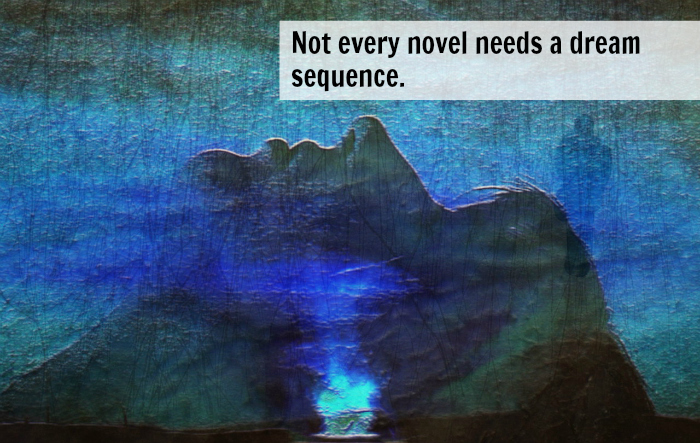
Upturned Silhouetted Profile Against a Blue-Green Background


It never ceases to amaze me how much bad writing there is in the world.


Truly, when you think about it, you can most likely remember more poorly-written books you've read than well-written ones. Why is that? Bad prose tends to stick in our memory. Think of it as a kind of gruesome car accident--you know you shouldn't watch it, but you can't look away.


Bad writing is almost predictable in its awfulness. That is, there are several contributing factors to a poorly-written piece that can be seen almost across the board.


If you want to avoid bad writing, you need to avoid the factors that contribute to bad writing. One way you can do that is by cutting these scenes.


1. Mirror Scenes


Nothing in prose irritates me more than getting character description from a reflection. Most of the time, these scenes consist of a character peering into the nearest reflective surface--whether it be a mirror or a lake or even a spoon--and commenting on his or her appearance as though noticing it for the first time. How many times do you look in the mirror and look yourself over from head to toe, noting your "caramel-colored eyes" or "luscious red curls." Probably never. Honestly,there are better ways to reveal a character's appearance.


2. Dream Sequences


Oh, goodness. Dream sequences, for me, are right up there with mirror scenes. The only difference is that, unlike a mirror scene, a well-written dream sequence can serve the plot. For example, in Veronica Roth's Divergent, dreams form an integral part of the story. Unfortunately not all dream sequences are created equal. I've seen authors slip in dreams seemingly only for the sake of making word count. Don't do that. If you're going to use a dream, make sure it's relevant to what's going in in your story.


3. Commonplace Exchanges


I once read a novel in which a whole chapter was spent chronicling a trip to the grocery store. I wish I were kidding. If your scene or chapter doesn't reveal character or move the plot along, you're better off without it. No one wants to watch your protagonist picking out produce. We do that enough in our own lives as it is.


These are just three types of scenes that can be removed for the sake of strengthening your piece. I know there are others, but these cover most of the big-picture problems.


What types of scenes do you cut from your work? Do you agree with these three?


P.S. The Art (Not Science) of Chapter BreaksAvoiding Genre Fixation, From Daily Writing Tips: 34 Writing Tips That Will Make You a Better Writer, and Said Isn't Dead.

Monday, December 30, 2013

Lovely Links 12.29.13 - 01.04.14

Image

The first post of every month is going to be dedicated to extraordinary links I've gathered from various places on the Internet. Most of the links will have but one thing in common: they will be related to reading or writing. Other than that, who knows? Here's what we've got this week:

2
Related Posts Plugin for WordPress, Blogger...