Image Map
Showing posts with label Fiction. Show all posts

Monday, June 9, 2014

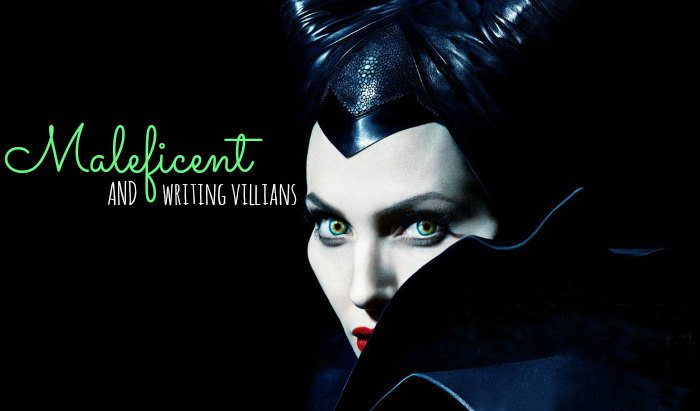
Maleficent and Writing Villains

maleficent-watch-first-trailer-movie-angelina-jolie

The other day my mother and I went to see Maleficent. In spite of not knowing much about the film going in, she and I both thoroughly enjoyed it. From the cinematography to the makeup to the characters themselves, everything was wonderful.


What captured my attention most of all was Maleficent.


Why?


Because she was portrayed as a sympathetic character rather than a one-dimensional villain.


I'll refrain from spoiling as much as I can. All you need to know is that in this version of the classic tale, we get much more of Maleficent's backstory. We see her as a young faerie and learn about the events that have hardened her heart. It is easier for us to understand her (otherwise questionable) actions because we know her past experiences and have a better sense of her wants and motivations.


Most importantly, Maleficent is dynamic. At the end of the film, she is a different woman than she is toward the beginning. Once again, I don't want to spoil, so that's all I'm going to say about that.


Maleficent was delightful, refreshing, and entertaining. While watching the film, I also learned a great deal about writing likable and three-dimensional villains. Whenever you want to add depth to your baddies, make sure they have a backstory, clear motive for what they do, and some kind of arc.


If the villain hasn't been changed by the events of the story, then what is the point for the story at all?


Have you seen the movie? What did you think? What do you think is the key to creating quality villains?


P.S. The 4 "A"s of Characterization, How to Develop Stronger Characters, and How to Get into Your Characters' Heads.

Friday, March 21, 2014

From the Archives: The 4 "A"s of Characterization

OLYMPUS DIGITAL CAMERA

Every writer understands the importance of creating believable characters. Story revolves around people--therefore, characters are arguably more important than plot. Whether you're writing a novel, short story, memoir, or personal essay, it's vital that you make your actors as three-dimensional as possible. Consider the following four "A"s of characterization:

1. Actions. What risks has the character taken in the past? How has he or she treated family and friends? What about enemies? What hobbies does he or she enjoy? What has your character done? What is he or she doing in the story?

2. Attitudes. How does the character feel about gay marriage, abortion, religion, and other  hot-button issues? What are your characters' views on the world?

3. Artifacts. What are your characters' prized possessions? What shelter do they have? What cars do they drive? What's the first thing they'd save in the event of a fire?

4. Accounts. What are some noteworthy anecdotes about these characters? What do other people have to say about them? What rumors have been circulated?

This is a rough list of just a few questions you can use to generate information for your four A's. If you want better characters, give this system a try. And good luck.

What do you think of this system? How do you like to flesh out your characters?

Click to tweet: Want fully-formed characters? @thecollegenov has some tips. http://wp.me/p2FPLe-EH

Sunday, November 17, 2013

The Session: An Excerpt

4661202721_aaa3efd883_b


Author's Note: This is an excerpt from the short story I read for my senior capstone presentation. If you're interested in reading more of my work, feel free to contact me.


The therapist’s office was a stuffy, wood-paneled room with beige carpet, tall windows, and mahogany furniture. There were golden curtains on the windows. The room was furnished with four chairs, a desk, a bookcase, and a potted plant. The room reminded Sheila of her gynecologist’s office, though she wasn’t sure why.


“I’ve heard of you two,” said the therapist, a blonde woman who could’ve been a model were it not for her height. “Then again, I don’t know anyone who hasn’t. I’m surprised you’re just now seeking therapy for what you both went through.”


Sheila twisted the white gold band on her left ring finger. Although Dirk had taken his ring off, she wanted to keep hers on. She felt naked without it. She’d grown accustomed to its weight. “This isn’t about the island. It’s about an affair.”


Dirk scratched his red stubble. “It’s about our whole marriage.”


“I see,” said the therapist. She scribbled something on her yellow legal pad and tapped her pen against her nose. She could be pretty, Sheila thought, if only she did something about her weight and her nose.


“A week ago I found him having sex with someone else.” Sheila pulled her hair into a ponytail. She had to keep her hands busy so she wouldn’t bite her cuticles. She’d made them bleed that morning. Her fingertips were covered with polka-dot Band-Aids. “We’ve only been back for two months. How could this have happened so quickly?”


“Did you ask him about it?” the therapist asked.


Sheila felt like smacking her. “Of course I asked him about it. He’s my husband, isn’t he? Why wouldn’t I have asked him?”


“Hey,” said Dirk, bumping Sheila’s knee with his, “do you need to get some air?”


Sheila realized that her nails were digging into her thighs. She stood and smoothed her skirt. “I’d like a drink of water."


While she watched the therapist pour her a glass from the pitcher, Sheila thought about water. She remembered how much they’d come to value water on the island. She remembered the first few days, lying spread-eagle on the sand with the sun beating down, begging for Dirk to kill her, please, so she wouldn’t die of thirst. She remembered him asking her when. He’d wanted her to be certain when she wanted to go.


In the present, the therapist handed Sheila the glass of water. Sheila sat back down. She chugged the water without stopping and drained the entire glass. Dirk took the empty cup from her and set it on the table in front of them. Sheila wondered if he remembered the water. She wondered if he remembered how it felt to be so thirsty, so bone-dry-as-the-desert inside of his cells.


“Sheila,” said the therapist, “when did you notice that something was amiss?”


Amiss, she said, like their marriage was a painting hanging crooked on the wall. Sheila stared at the glass on the table. She’d always known that she and Dirk were destined for divorce. As high school sweethearts, their chances of growing old together were slim. Both of them had known that going into the marriage. Still, they’d decided to make it work. If Sheila closed her eyes, she could still feel the way her wedding dress hugged her. She remembered the first affair. She remembered the second. Back in the present, her stomach lurched.


“We were doing all right until I cheated,” said Dirk. There was no need for him to elaborate. The therapist had their file. She knew about the affairs. What she didn’t know, thought Sheila, was how their time on the island had almost repaired them. She didn’t know that the day they’d found water had been the first time they’d made love in months. She had no idea that Sheila was pregnant again. She didn’t know that, and she most likely never would.


“Sheila,” said Dirk, “are you sure you’re all right?”


That concludes the excerpt. What did you think?


2

Monday, May 27, 2013

Set the Mood with a Playlist

3170746448_09f903e23d_z
Music and creativity are inexplicably linked. Both stimulate the brain, trigger emotions, and inspire people all over the world. A writing tip I discovered lately is to listen to music while you write. Compiling a writing playlist can help you get more writing done by putting you in the mood to put fingers to keyboard or pen to paper. William Shakespeare wrote, "If music be the food of love, play on." Good ol' Willy Shakes. He knew what was up.

My favorite resource for creating playlists is Grooveshark. It's easy to use and has an attractive interface and a massive collection of songs and artists. They have every song that I've ever looked up. For the sake of this post, I'll show you what the playlist for my latest novel looks like.

In this playlist, each one of the songs relates to the tone, characters, setting, or theme of the novel in some way. I have this music on in the background when I'm working on my novel. It helps me get into the writing zone, so to speak, so that I can make some serious progress.

What do you think? What kind of music do you listen to when you write?

Monday, May 6, 2013

The Merits of Reading and Writing Fanfiction

212677871_451eda44c6_z

Whether you're a fan or a critic of Fifty Shades of Grey, there is no denying that the novel has a universal appeal. Fifty Shades of Grey was originally written as a work of Twilight fanfiction paying homage to the work of author Stephanie Meyer. E. L. James took her fanfiction, altered some names and book-specific details, and made a massive profit from her work. You may not be interested in reading or writing anything related to Twilight, but there are many other kinds of fanfiction out there. If you want to know why you should look into reading or writing fanfiction, let this blog post be your guide.

One of the greatest benefits of fanfiction is that it explores a wider range of issues than mainstream fiction. Fanfiction is noncommercial, so authors can write about whatever they want without fear that the subject matter will affect their book sales. The anonymity of fanfiction is another factor that allows authors to address whatever issues they want without worrying about being too controversial.

Another wonderful thing about fanfiction is that it is free. This case is one in which you get much more than what you pay for, however. No pay means that fanfiction writers aren't in it for the money. They're passionate about the craft. You could say that fanfiction is extremely cost-effective.

Fanfiction is also interactive. Thanks to the magic of the internet, readers can submit reviews and ratings for stories they enjoy. Writers receive the feedback and use it to improve their work. These reviews also serve as motivation to keep writing. You're more likely to finish a project if you know that people are interested.

If you want to write fanfiction, it's easy to get into. There are pre-established stories, characters, and settings - all you need to do is come up with a scenario. Fanfiction comes with preset fan bases. Everything is online - check out Fanfiction or Archive of Our Own to get started. Read a few stories first to get an idea for the format.

Fanfiction is a great way for beginners to practice the craft of writing. You can post stories, get feedback, and gain a better understanding of your prowess as a writer. Readers and writers alike can benefit in many different ways from the world of fanfiction. So what are you waiting for? Get out there!

What do you think? How do you feel about fanfiction?

Wednesday, January 30, 2013

How to Write a Novel in a Month (The Easy Way!)

novel


Today I stumbled across this interesting article by Maya Rodale with The Huffington Post. Written in honor of National Novel Writing Month (NaNoWriMo), this articles gives some tips and tricks for cranking out a novel in close to thirty days. This method is the one I've been using for my novels, so I thought I'd share. Here's what it says:
November is National Novel Writing Month and in honor of that, I thought I'd share my system (developed over the course of writing 10-plus books) for quickly producing a good novel without a ton of angst and anguish.
If cutting yourself off from the world (and Internet) at a five-star hotel with excellent room service is not an option, try the following:

Know your characters. A novel won't work without fully developed, compelling characters. Take the time to know the hero and heroines story before you start plotting or writing. You may never explicitly use this information in the text, but it will enhance your story.

An outline is totally worth your time. I know, you want to start immediately and see where the muse leads you. Well, the muse is a trickster and may lead you down a dead end path. Or perhaps she's using Apple Maps. With an outline, you know where you're heading and have an idea of the route you're going to take, which makes for a smoother journey. You can always take side trips.

Draft #1: Focus on dialogue.
Estimate word count: 40,000
The first draft of my novels is entirely dialogue. This is the most direct way to make sure your characters are telling the story and moving it forward. Unless it's a multicharacter scene, I won't even include tags like "he said" or "she said." If you can't tell when your hero or heroine is talking without identifying it, then it's a sign you need to go back and work on their character and voice.

Draft #2: Crank out everything else.
Estimated word count: 65,000
This is another FAST draft full of description and everything else. It's full of really awkward sentences and misplaced punctuation marks. I add lots of "TKs" (wherever something is "to come") when I'm not sure of a word but just want to keep going.

>Print, read, make notes. Print out a copy and read it with a pen in hand. You're not just looking for typos or ways to tighten your sentences, but also trying to figure out how the story hangs together before you write so many words that it's a nightmare to relocate scenes. Likewise, it's far easier on the soul to cut fluffy, useless scenes when you haven't invested much time in them.

Draft 3: Craft.
Word count: 80,000
This is where it starts to get good. You've cut the rubbish scenes, sketched out some new ones. I go over each scene, line by line, really crafting my sentences by cutting useless words and selecting the very best ones to use. This is slow going, but it's where the magic happens.

Draft 4: Give it to someone to read and do something else.
Find someone willing to read your manuscript with fresh eyes while you allow your eyes to rest by working on something else entirely. I like to get a few people to read it, if I can. And then I do not revise until I've gotten everyone's feedback. If three out of three people say your first chapter is weak, it is. If one person says your heroine is vapid, one person loves her, and another commented on something else...well, that's a muddle to sort though and it's up to you.

Revise. Again.

Revise. Again.

Send it off into the world. After spending years in the writing world, I suspect that this is the step where most authors fail. This is what separates the published from the unpublished. I think there are many excellent books tucked under beds...but you're not competing with those. You're competing with the ones composed by brave authors.

So that, more or less, is the process for writing a novel in a short amount of time with limited stress and anxiety. All it comes down to is prewriting, outlining, and blood, sweat, and tears poured onto your paper or over your keyboard.

What do you think? How do you write a novel?

Tuesday, December 11, 2012

Selections from Pixar's 22 Rules for Storytelling

tumblr_m5yyqloJkV1qg50npo1_500


Note: This information comes from the following article. I cannot take credit for any of these rules.


When I stumbled on Pixar's 22 Rules of Storytelling, I realized the company knows exactly what they're doing. It's clear to me now why Pixar is the leading contender when it comes to film and animation. Here are a few of my favorite points:
#2: Keep in mind what's interesting to you as an audience, not what's fun to do as a writer. They can be very different.

#7: Come up with your ending before you figure out your middle. Seriously. Endings are hard. Get yours working up front.

#9: When you're stuck, make a list of what wouldn't happen next. More often than not, the material that gets you unstuck appears.

#15: If you were your character, in this situation, how would you feel? Honesty lends credibility to unbelievable situations.

#19: Coincidences that get characters into trouble are great. Coincidences that get them out of it is cheating.

#22: Putting it on paper allows you to start fixing it. If a perfect idea stays in your head, you'll never share it with anyone.

These are just a few of the excellent tips Pixar offers about storytelling. Interested? Read them all. You just might learn something.


What do you think? What is your favorite storytelling tip?


Saturday, December 8, 2012

How to Get Into Your Characters' Heads

brian


As a writer, I know it's difficult to get inside your characters' heads, especially if a character is different from you. Creating believable characters means getting to know a character all the way down to the core of his or her being. If you're finding it hard to identify with your character and figure out everything that makes him or her tick, consider trying the following strategies:


Write an entry in your character's journal.


Write a letter from your character to a friend or loved one.


Walk, talk, eat, and move like your character for a set amount of time.


Write a bulleted list of important moments in your character's life.


Make a playlist of songs that remind you of your character.


These are just a couple of techniques for getting over writer's block where characters are concerned.


What do you think? How do you get into your characters' heads?

Related Posts Plugin for WordPress, Blogger...