Image Map
Showing posts with label writing advice. Show all posts

Monday, June 9, 2014

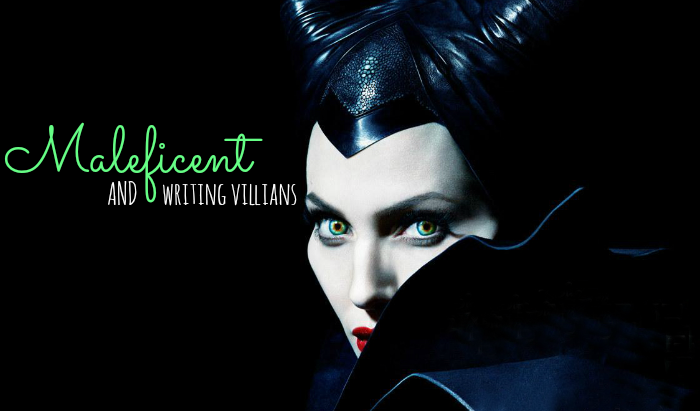
Maleficent and Writing Villains

maleficent-watch-first-trailer-movie-angelina-jolie

The other day my mother and I went to see Maleficent. In spite of not knowing much about the film going in, she and I both thoroughly enjoyed it. From the cinematography to the makeup to the characters themselves, everything was wonderful.


What captured my attention most of all was Maleficent.


Why?


Because she was portrayed as a sympathetic character rather than a one-dimensional villain.


I'll refrain from spoiling as much as I can. All you need to know is that in this version of the classic tale, we get much more of Maleficent's backstory. We see her as a young faerie and learn about the events that have hardened her heart. It is easier for us to understand her (otherwise questionable) actions because we know her past experiences and have a better sense of her wants and motivations.


Most importantly, Maleficent is dynamic. At the end of the film, she is a different woman than she is toward the beginning. Once again, I don't want to spoil, so that's all I'm going to say about that.


Maleficent was delightful, refreshing, and entertaining. While watching the film, I also learned a great deal about writing likable and three-dimensional villains. Whenever you want to add depth to your baddies, make sure they have a backstory, clear motive for what they do, and some kind of arc.


If the villain hasn't been changed by the events of the story, then what is the point for the story at all?


Have you seen the movie? What did you think? What do you think is the key to creating quality villains?


P.S. The 4 "A"s of Characterization, How to Develop Stronger Characters, and How to Get into Your Characters' Heads.

Friday, June 6, 2014

Twitter for Writers

Tweet Tweet

Twitter is one of the greatest under-utilized resources for writers at the moment. It's a great way to promote your work, communicate with other writers, find some writing advice, and have a fantastic time. I only recently started spending some serious time on Twitter, and I could kick myself for not using it sooner.


So why should you set up a Twitter account?


Well, this social media platform is a spectacular way to get your name out there and build up a following. You can promote your work, support other writers who want to promote their work, and link to content that you think other people might find interesting. I promote my blog posts and freelance work through Twitter and it's gotten me a lot more exposure than I would've gotten otherwise.


Twitter is also a great place to get in touch with other writers. I've met so many wonderful people on Twitter, most of them writers. They support my work and I support theirs. We talk about all things writing and non-writing. If you're not currently involved with groups of other writers, Twitter is the best way to meet like-minded individuals. Whenever I interact with other writers on the site, I feel as though there is a sense of community.


Another good reason to use Twitter? Writing advice. Seriously. There are so many amazing tips that get passed around for free. All you have to do is type "writing tips" or "writing advice" into the search bar and millions of helpful Tweets will pop up. The internet is truly a glorious place.


If you don't have a Twitter account, you need to sign up. If you already have one, you should be using it more. And you should definitely be following other writers (*ahem* ME). Tell me you followed me over from this blog and I will most likely follow you back.


What do you think of Twitter? How does it help you as a writer?


P.S Avoid Distractions While Writing.

Wednesday, May 28, 2014

Book Review: The Successful Novelist by David Morrell

Image

David Morrell is a genius.


There's no getting around that fact. After reading this book, I am more than convinced that this man has more writing talent in his pinky than I do in my whole body.


I digress.


When I mentioned on Twitter that Stephen King's On Writing is one of the most influential books about writing that I have ever read, someone suggested that I look up David Morrell's book The Successful Novelist: A Lifetime of Lessons about Writing and Publishing.


I'm delighted I did.


This book, like King's, provides a veritable treasure trove of knowledge regarding the craft and the business of writing. However, Morrell takes a much more practical approach, giving out advice for you to use in your daily writing sessions. King's book is largely memoir with some practical bits sprinkled in. On the whole, Morrell seems so much more approachable.


The Successful Novelist is suitable for writers of all skill levels. Whether you're just starting out or you've been writing for ages, this book is for you.


It's also short, succinct, and easy to read and understand. What more could you want?


Go out and pick up your copy today. This book will change your life.


Have you read this book? What did you think of it? What book would you like to see me review next?


P.S. Book Review: Adulting by Kelly Williams Brown.

Sunday, April 27, 2014

In Conversation with - Bob Gale, Co-Writer of Back to the Future

[caption id="attachment_2575" align="alignnone" width="640"]Via: Flickr Via: Flickr[/caption]

Back to the Future is one of my favorite movies. This is due not just to the fact that I love eighties films, but also to the acting, directing, and most importantly, the writing. One of the best interviews I've read was a conversation with Bob Gale, one of the co-writers of Back to the Future. I'd like to share a little bit of the interview with you.


What do you think about theories on how to write?
First and foremost – don’t let anyone tell you they have a ‘method’ for making a story into a success. Nobody does, and if anyone says they do, they are lying. There is no magic formula, and mercifully, there never will be. If there was such a method, there would be no bad stories, and I don’t think that’s the case now, is it?! All you can ever do as a writer is write your own story your way. Master your craft, of course, by reading stories, and learn from what other writers say about what worked for them, and from teachers about story theory. The information you can get this way is all interesting, and adds to your personal ability, but you must accept all these opinions only for what they can do in helping you to establish for yourself a working method that works for you.


Remember, even with a formula or rule book that seems incredibly convincing or appears to be globally accepted, all that’s happening is that someone is giving their opinion; and often that someone hasn’t actually had any success themselves. Formal learning is only useful if it helps you to find your own voice and establish your own personal method. Your rules are the only ones that really matter for your story.


Do you consider story structure in your own development process?
No. Of all the magic ‘how to write’ methods, I specifically don’t agree with any that are based around story structure. Structure is not a good starting point for a creative process. Stories develop around characters and their behaviours, learning and growth. Structure results from this development. Of course, structure does exist at the scene level, and as you write your scenes, your story will gain a structure under the surface, but it’s not a starting point for development. People talk about acts and how they must deliver the story in three acts or five acts, but acts don’t even exist for a novelist or scriptwriter! Acts are there for practical reasons in physical theatre – to change costumes and switch scenery around – but acts have no place in defining how you create your story. Yes, you can define where acts start and finish once a story is complete (I’m not sure why you’d want to, but you can) but there’s no sense whatever in trying to write a story driven by acts – or even consider acts - unless it is genuinely going to have a curtain going up and down, or the modern equivalent – advertisement breaks in a TV story. For a novel or film script – forget about acts.


How do you develop your own stories?


All writers face the same starting point. We start with a story idea and the challenge is to get from this idea to a beautifully developed story that remains faithful to that original idea. Let me tell you how Back to the Future came together.


Like any other writers, Robert Zemeckis and I started with an idea, and ours looked like this:


“A kid goes back in time. He meets his parents when they were young and his mother falls in love with him.”


That was it. The idea. The starting point. From here, we began with the logical assumption that the story will have three characters – a son and his parents. What do we reasonably know about these characters? Well, if his mother is going to fall in love with the son instead of his father, he must have different qualities from his father. So we said, what if, instead of his father being paternal to him and telling him how to behave, it was the other way around? After all, in 1955, his father is just a kid himself, so why should he be paternal? Marty from 1985 could be the streetwise, strong one, and his father can be unassertive and learn from his son. It is this difference between them that attracts his mother to Marty instead of his future father. Excellent.


So the character of George McFly takes on some shape, as does the character of Marty and Lorraine, and the story is developing through this knowledge of character. If he goes back in time, how did he time travel? In a time machine – where did it come from? Who built it? What does it look like? Maybe a corporation is making it. But, why? Maybe it is government property and it gets stolen. Maybe it’s a product of a crazy inventor, and bingo, we knew that was right, and Doc Brown was born – our fourth character. How, what, where, why...?


And for each answer we came up with, there was a set of logical implications that began to build the story. So, for example, we asked ourselves, if Marty goes back in time, what will he do when he gets there? Well, what would you do in Marty’s position? We would invent something we know about from the future that would make us famous, wouldn’t we? So we said, wouldn’t it be great if he invents rock and roll? What would this mean to the story? Well, it set the timeframe - it meant that he had to go back to around 1955. It also meant that, somewhere in the setup, Marty had to show he can play music, so his band in 1985 and his ability to play guitar and his musical ambition got its place in the story setup, and therefore in his character. Similarly, we thought why doesn’t Marty invent the skateboard? Same thing – we decided Marty would invent the skateboard in 1955, so we needed to establish him as a skateboarder in the setup. You can see straight away from these two small examples that Marty’s character is emerging all by itself – the character actions deliver behaviours – he’s going to be a guitarist in a band and he’s going to be a skateboarder – and this in turn affects the plot – he enters a Battle of the Bands competition and he gets about town using a skateboard. Plot driven by characters reacting in accordance with their natural character.


Just from these few questions and answers leading to more questions and more answers we have characters and behaviours that drive our story, in service of that original idea. We know that Doc Brown is a crazy scientist who invents a time machine. We know Marty is a streetwise cool kid, who rides a skateboard, plays in a band and goes back in time. We know that Marty’s mum, Lorraine, in 1955 is a romantic. She’s looking for a boyfriend and is constantly thinking about love. We know that Marty’s dad, George, in 1955 lacks confidence and is unassertive, and that is why Lorraine will fall for Marty instead of George when they meet. Look at that! All directly deduced from the original idea, which means the characters and behaviours make sense and the story has a cohesion and integrity as a result.


Of course, this is only a short excerpt of the interview. To read the whole thing (which I recommend doing), you should go here.

Sunday, April 20, 2014

How Google Drive Can Save Your Life (And Your Writing)

7645638616_784bf39c52_b

It’s every writer’s worst nightmare: you’ve been slaving over a manuscript for days, weeks, months, maybe even years when something horrifying happens and you lose all your work.


Whether it’s due to an unexpected spill, power outage, or divine intervention, there’s no denying that losing your work is a demoralizing setback. It can cause cursing, screaming, and sometimes tears.


Surely there must be another way.


I’ll share something with you: Google Drive. Seriously, Drive is the answer to your prayers. This web-based program allows you to upload existing content or start a new project in less than a minute. The text editor looks and behaves just like Microsoft Word or Pages or what have you. But that’s not the best part.


The best and most appealing feature of Google Drive is the fact that it saves your work automatically. Every letter you type is backed up to the cloud. You don’t have to take any extra measures.


It is fantastic.


Since all of your data is saved to the cloud, you can also access it when you’re away from your personal computer. If I’m working on my novel at home and go to class without my laptop, I can go to the library between classes and access my work on one of their computers. I’ve also downloaded the Drive app to my cellphone and Kindle Fire in case inspiration strikes while I’m on the go.


Google Drive is spectacular. There’s nothing more I can say. If you’re lazy about backing up your work, it’s the absolute best way to ensure you don’t lose your work without you having to put forth any effort. Give it a try and let me know what you think. You can thank me later.

Monday, April 14, 2014

What the HIMYM Finale Can Teach Us About Writing

Image

I’ve been told a few times that I shouldn’t blog angry.


I’ve been sitting on this topic for a while, but I didn’t want to address it until my fury subsided. Since the How I Met Your Mother finale aired two weeks ago today, I think it’s time to write this post.


Some viewers enjoyed the HIMYM finale. An overwhelming majority did not. How can that be? It all comes down to writing--bad writing, really, with terrible choices. Die-hard fans of the show who had watched nine seasons of heartache, growth, and yearning felt betrayed to see relationships dismantled, plot lines overturned, and characters behaving inconsistently.


Clearly, the HIMYM finale has a lot to teach us about writing, especially what not to do. So, fellow writers, here’s a brief lists of don’ts, epitomized by the disappointing conclusion to a beloved comedy.


  1. Don’t dedicate an entire season to preparations for the wedding of two characters that end up divorcing almost immediately.

  2. Don’t force two characters together, spend one episode per season explaining why they aren’t right for each other, and then throw them back together at the end of the series.

  3. Don’t transform a womanizer into a monogamist and then back into a womanizer who doesn’t know the name of the woman who gave birth to his child (he doesn’t even make up a name, just refers to her as a number).

  4. Don’t kill the mother when the entire show is about meeting her.

  5. Don’t kill the mother.

  6. DON’T KILL THE MOTHER.

  7. While I’m at it, don’t build sympathy for a character and kill her offscreen as little more than a footnote. It’s cruel and will only make your audience resentful.

  8. Don’t have your protagonist continue to pine for the same woman even after he’s found the love of his life (he claims), married her, and lost her.

  9. Have a legitimate reason for the protagonist to divulge his past to his children.

  10. Don’t have your protagonist show up at The One That Got Away’s house with a nostalgic item to help win her back… and then imply that the woman will have him (of course). THEY ARE DIFFERENT PEOPLE THAN THEY WERE WHEN THE ITEM MADE ITS FIRST APPEARANCE. WHY WOULD YOUR PROTAGONIST TRY SOMETHING LIKE THAT?


Maybe I’m still blogging angry. I promise I’m not only trying to rant. I want you all to become better writers. You can do better than the How I Met Your Mother finale. You should.


After all, that show made it through nine seasons. Anything is possible.

Sunday, April 6, 2014

Lovely Links - April 2014

3293117576_05f43d8305_b

This post should've gone live last week, but it didn't happen. Oh well.

Here are some cool resources I found around the Internet for this month:

What do you think? Do you find these links helpful?

Monday, March 31, 2014

Avoid Distractions While Writing

Weapons of Mass Distraction

One of the most difficult things about writing is avoiding distractions.


Sometimes the lure of social media is too strong to resist. For instance, while writing this blog post, I had to really force myself to concentrate on the task at hand instead of compulsively checking Twitter, Facebook, and Pinterest. I'll be the first to admit - it's tough to focus. Of course, the Internet is not the only evil in the world. When it comes to writing, you can also be distracted by a myriad of nuisances, such as pets, friends, family, the telephone, the television, and sometimes even the weather.


What's a writer to do?


If you're working on a project and don't want to be distracted, consider these tips to help you stay focused:


1. Disable automatic log-ins. If you know you have a tough time resisting social media, make it a little bit harder on yourself by logging out of your accounts before sitting down to write. Human beings are nototriously lazy. If you have to log-in before looking your ex-boyfriend up on Facebook, it might give you a moment's pause. Hopefully, with this added step, you'll realize you shouldn't be on social media and get back to work right away. But if not, you can always...


2. Block all time-wasting websites for the duration of your session. If logging out of your accounts isn't enough to deter you, download an app such as StayFocusd or Strict Workflow for Chrome, Leechblock for Firefox, SelfControl for Mac, or even Cold Turkey. Once you've discovered your demons, add them to the lists of sites to block, set a time to block, and let the program do the rest for you so you can focus on writing.


3. Turn. It. Off. This tip applies mostly to the computer but can be extended to all manner of technology. If you don't need it to write, power it down. If you write with pen and paper, you should be nowhere near your laptop. It shouldn't even be on. If you use a word processor, go ahead and write on your computer - just make sure to switch off your wifi. That way, if you're tempted to access the Internet, you'll feel guilty when you see that you're unable to connect. Sure, you could flip the switch back on just as easily, but for most cases, turning it off should be enough to stop you. The same goes for your cellphone - turn it off or silence it. Let everyone know how long you'll be working and tell them to leave a message if it's anything important. I promise you the world can do without you for an hour.


4. Write or Die. No, I'm not just being dramatic. Write or Die is a life-changing webapp that encourages you to reach a custom word count in a certain amount of time; say, fifteen minutes. If you slack off and stop typing for a long, the program punishes you with an unpleasant noise (such as "Mmmbop" by Hanson) and a bright red screen. Honestly that red screen scares me more than anything. I usually set my word count at 1,000 and the time period for an hour. I'm always amazed by how much I manage to accomplish. Check the program out.


5. Play some music. This tip isn't for everyone, but I've found that tuning into Pandora's "Classical Music for Studying" really does wonders for my productivity. If classical music isn't your thing, try to stick to some kind of music without lyrics for maximum concentration benefits.


There you have it: a few simple solutions to help you overcome distraction and make some progress with your project. Once you've made some headway, feel free to reward yourself with a social media or texting break. After all, you deserve it. Just make sure not to cheat and reward yourself early!


What do you think of these tips? How do you avoid distractions?

Monday, September 2, 2013

A Space to Call Home

desk
Great writers are known not just for their prose, but for their writing spaces. George Bernard Shaw had a rotating hut. Dylan Thomas did his best work cooped up inside a boat house. And J.K. Rowling, a more contemporary example, penned the Harry Potter series in an Edinburgh café.

While you may not have your own special shed or writing carrel, you no doubt have a space where you prefer to write. For me, it’s my bed. I have a desk, but I can’t seem to do anything creative while sitting there. If I do anything other than homework, it has to be done in my bed.

If you haven’t discovered your ideal writing space, this article should help you. Here are three elements to consider when choosing a place where you can put pen to paper or fingers to keys.

The first thing you need to consider when selecting your space is surface type. For example, you need to figure out whether you prefer writing at a desk, in bed, or in a hammock. If you’re not sure, try every surface you can think of. See which one works best for you. There’s no rule that says you have to get your work done at your desk.

Got a surface? Okay, good. Now you need to decide whether you’ll be writing inside or outside. In my experience, most people prefer the convenience of writing indoors. You have control of the temperature and won’t have to cancel a session on account of the weather. There are some people, however, who prefer working in the fresh air and natural daylight. You might very well be one of those people.

Finally, you should consider writing in public versus writing in private. As I said before, J.K. Rowling loved writing in public cafés. She loved soft chatter of café patrons and the ready availability of coffee and tea. I, on the other hand, cannot work when there are people talking. I get the most writing done when I hole up in my bedroom. Once again, you’ll have to see which works best for you.

Every writer has some sort of unique writing space. Some prefer writing at a desk, while others enjoy the comforts of bed. Writers can choose to do their work outside or indoors. Moreover, some authors like to pen their pieces in public, but there are those who would rather keep their insights hidden behind closed doors. Whatever you prefer, just remember that your writing space is just that—yours. As long as you’re comfortable, that’s all that matters. Try some spaces on for size and find your most productive place.

What's your favorite writing space?

Friday, August 16, 2013

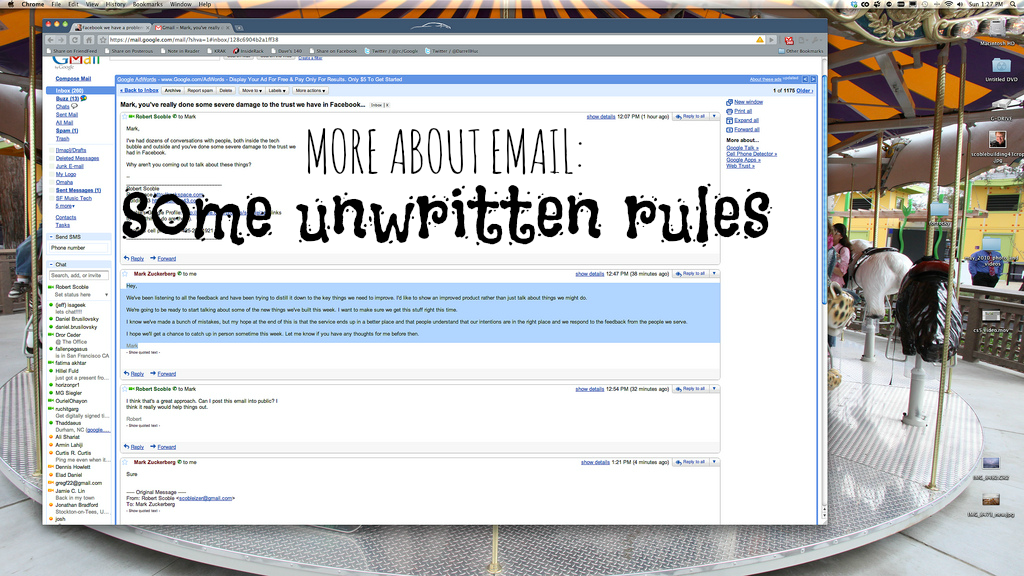
More About Email: Some Unwritten Rules

email

I’ve mentioned before how much I love Molly Ford. Her blog is fantastic. It was a pleasant surprise to me to find, in her post for yesterday, that she included a link to an article about some unwritten rules for emails. While I encourage you to check out the link for yourself, I’m including a snippet of it for your benefit. Here’s what The Daily Muse has to say about email:


  1. Your subject line should always be descriptive. “Intro” is not descriptive enough. “Intro: Alex (The Muse) // Jennifer (XYZ Co)” is better.

  2. Keep every email as short as you can; it saves you time and, more importantly, respects the recipient’s time.

  3. The faster you respond, the shorter your response is allowed to be.

  4. Always include one line of context if the recipient isn’t expecting this email. This is as relevant for first-time emails (“This is where we met”) as it is for emails to someone you work with regularly (“This email is about the next phase of that project we’re working on together”).

  5. Put your “ask” or “action items” first in the email, not last, and make them explicit. It should be immediately clear to the recipient what you want.

  6. If there is a deadline, say so. If the request is not urgent, say so.

  7. If you don’t need a response and an email is FYI only, say so.


Some of these tips should be familiar to you by now. After all, I covered some of them in yesterday’s post. But The Daily Muse include several others that I never really thought about. For the full list, click over to the link in the introduction. And check out Molly’s blog, too, while you’re at it. She’s seriously awesome. If you like either of those links, feel free to send the authors an email. Just make sure that you follow these unwritten rules!

Wednesday, August 14, 2013

How to Keep a Journal

journal


Journal writing is one of the easiest and most rewarding methods to improve your writing skill. They’re not just for children anymore. Long gone are the days of “Dear Diary, today I met the boy of my dreams.” In their place is the journal, a simple record of daily life, a snapshot of an individual’s perspective of the world around them.


A journal is much more rewarding than a diary. It can help you track progress, set goals, and remain motivated.


You want to keep a journal, darling? Let me tell you how.


Before you actually record anything, you need to decide which method to use. Will you write down your entries with pen and paper, or will you type your thoughts and concerns into a word processor? Do you want to keep your journal to yourself or share it with the world?


Popular methods of journaling include pen and paper, typing into a word processor, blogging, tweeting, and even letter writing. If you want to write longhand, you can use a composition book, spiral notebook, sticky notes, or specially-made bound book. If you have your heart set on blogging, there are dozens of platforms and hosting websites to choose from. You should select whichever method you’re most comfortable with.


Once you’ve decided on a medium, you should figure out a chunk of time to set aside for writing. This time should be treated as sacred. Make sure you can find a quiet space free of distractions where you won’t be disturbed. Ideally, this time should be daily, though it can be weekly or monthly depending on the type of journal that you want to keep.


There are many different types of journals. You can pick any of these ideas, combine some, or create one of your own. A few different types of journals include dream, career, personal, food, goal, exercise, and task journals. Much like the medium itself, which type of journal you choose to keep should depend on your personal preference.


Daily journal writing is a fantastic exercise. It keeps your mental muscles fit and limber. Additionally, it’s very rewarding to look back through your entries and see how far you’ve come. A journal can serve as a record of your progress and personal growth. So what are you waiting for? Go get a journal!

Tuesday, August 13, 2013

When to Stop Editing

edit

Ah, the red pen—a staple of exemplary writing.


Fiction writers, nonfiction writers, and poets alike utilize red pens to edit their work. If you don’t use a red pen, you’re certainly familiar with the backspace key and the Track Changes option on your word processor. Editing is a vital part of the writing process. You can’t have good writing without rewriting. As Patricia Fuller said, “Writing without revising is the literary equivalent of waltzing gaily out of the house in your underwear.” It’s foolish.


Of course, there is such a thing as too much editing.


When basic revising crosses the line into overanalyzing every single word and piece of punctuation, you know you’re in trouble. Although revising is important, it needs to have a finite end. No piece of writing can be more than nearly perfect. If you go through the same piece over and over again without stopping, you’re sacrificing time and effort better given to new projects.


I am now and have always been a perfectionist. I’m rarely satisfied with my completed pieces. When editing my work, I have a hard time stopping myself. There’s always something that needs to be fixed—in my eyes, at least.


As writers, we can also be our own worst critics. Our standards are different than everyone else’s. Sometimes the prose is not as bad as our minds make it out to be.


Additionally, editing can turn into a vehicle for procrastination. When we’re afraid to start new projects, we waste all our time on polishing pieces that are already excellent. Sometimes we just need to stop. Sometimes we need to give up.


We need to walk away.


If you’re waiting for someone to tell you that your work is perfect, the wait is over. You want someone to tell you that it’s okay to stop? To move on? To start something new?


That's where I come in.


That thing you’ve been editing to death is fine exactly as it is, I promise.


It's not a monster. It won’t frighten anybody. Slide it into your desk drawer, close the drawer, and go outside. Take a walk around the neighborhood. Play with your children.


Write something else.


The world doesn’t end just because you stop editing.


What do you think? When do you stop editing?

Monday, June 17, 2013

Guest Post: Lamar Hull from Direct4TV

110519-N-VA590-457


Writing tips for student athletes: Applying athletic principles to your writing

Being a college student athlete is tough. You've got to spend long hours practicing and, most importantly, you've got to learn to balance your time between school work and your sport. You may be set on continuing your sports career after college, but we all know sometimes things don't work out as planned, and that's why your college classwork is especially important. For a college athlete, building good writing skills can be nearly as vital as crafting your athletic ability.

Fortunately, learning writing skills isn't as hard as you may think – you can even apply some of the same principles from sports to your writing experience. Whether you're just trying to do well in school or you want to start writing your own novel, these tips can help make you a better writer.

Plan

Just like you'd plan goals for training, you can plan goals for schoolwork. Perhaps you could set a goal for a GPA you want to earn, a grade on a research paper or a word count for your personal writing. If you play on a team at school, you probably have set training and practice times. It's good to also plan out set times to do work and write every day. If you set time to devote to writing, you'll get in the groove of sitting down with your computer to write, and it will become a daily habit. And with more planning comes plenty of practice!

Practice daily

You've probably heard it a million times, but practicing is crucial for improvement. You wouldn't go a week without training, so don't go a week without writing. Try to write daily to better yourself and your skill. The more you write, the better you'll get – just like how running through more basketball or football drills can help you become a better player. Do you play a couple different sports? Try different types of writing, too. Become a well-rounded writer and athlete with plenty of practice!

Accept criticism and improve on it

No one is perfect, and you don't need to try to be. Improvement is a continual process, and you can't expect to magically become a better writer or athlete. You have to learn to take your criticism gracefully. Don't let things get you down – whether you don't play as well as you'd like in a big game or you don't get the high grade you wanted. It's important to keep trying and to work hard to keep getting better.

Even if you're not a student athlete, you can use these tips to improve your own writing skills. With some hard work, you can become a great writer, too!

Author: Lamar Hull is a former Davidson College student-athlete who loves to provide advice to college students and college graduates. Lamar currently writes for Direct4tv. You can follow Lamar @lamarhull20 and his youth basketball blog.

Monday, May 20, 2013

From Daily Writing Tips: 34 Writing Tips That Will Make You a Better Writer

Today's post comes from Daniel Scocco at Daily Writing Tips. You can find the article in context here. I highly recommend that everyone have a look at this awesome resource.

writingtipstobecomeabetterwriter.jpgA couple of weeks ago we asked our readers to share their writing tips. The response was far beyond the initial expectations, and the quality of the tips included was amazing. Thanks for everyone who contributed.

Now, without further delay, the 34 writing tips that will make you a better writer!

1. Daniel
Pay attention to punctuation, especially to the correct use of commas and periods. These two punctuation marks regulate the flow of your thoughts, and they can make your text confusing even if the words are clear.

2. Thomas
Participate in NaNoWriMo, which challenges you to write a 50,000 word novel in a month. I noticed that my writing has definitely improved over the course of the book — and it’s not even finished yet.

3. Bill Harper
Try not to edit while you’re creating your first draft. Creating and editing are two separate processes using different sides of the brain, and if you try doing both at once you’ll lose. Make a deal with your internal editor that it will get the chance to rip your piece to shreds; it will just need to wait some time.

A really nice trick is to switch off your monitor when you’re typing. You can’t edit what you can’t see.

4. Jacinta 
In a sentence: write daily for 30 minutes minimum! It’s easy to notice the difference in a short time. Suddenly, ideas come to you and you think of other things to write. You experiment with styles and voices and words and the language becomes more familiar…

5. Ane Mulligan 
Learn the rules of good writing… then learn when and how to break them.

6. Pete Bollini
I sometimes write out 8 to 10 pages from the book of my favorite writer… in longhand. This helps me to get started and swing into the style I wish to write in.

7. Nilima Bhadbhade 
Be a good reader first.

8. Douglas Davis
While spell-checking programs serve as a good tool, they should not be relied
upon to detect all mistakes. Regardless of the length of the article, always read and review what you have written.

9. Kukusha
Learn to take criticism and seek it out at every opportunity. Don’t get upset even if you think the criticism is harsh, don’t be offended even if you think it’s wrong, and always thank those who take the time to offer it.

10. John England 
Right click on a word to use the thesaurus. Do it again on the new word and make the best use of your vocabulary.

11. Lillie Ammann
After editing the work on screen or in print, I like to read the text aloud. Awkward sentences and errors that slipped through earlier edits show up readily when reading out loud.

12. H Devaraja Rao
Avoid wordiness. Professor Strunk put it well: “a sentence should contain no unnecessary words, a paragraph no unnecessary sentences, for the same reason that a drawing should have no unnecessary lines and a machine no unnecessary parts.”

13. David
Write as if you’re on deadline and have 500 words to make your point. Then do it again. And again.

14. Yvette
Sometimes I type in a large font to have the words and sentences bold before me.

Sometimes, in the middle of a document I will start a new topic on a fresh sheet to have that clean feeling. Then, I’ll cut and insert it into the larger document.

I wait until my paper is done before I examine my word usage and vocabulary choices. (And reading this column it has reminded me that no two words are ever exactly alike.) So at the end, I take time to examine my choice of words. I have a lot of fun selecting the exact words to pinpoint my thoughts or points.

15. Amit Goyal
To be a good writer is to start writing everyday. As Mark Twain said, “the secret of getting ahead is getting started.”

Try using new words. i.e avoid repeating words. this way we learn the usage of different words.
Do edit your previous articles.

Start with small paragraphs like writing an article for a Newspaper, and proceed from there.

16. John Dodds 
Remove as many adjectives as possible. Read Jack Finney’s tale, Cousin Len’s Wonderful Adjective Cellar for a fantastical tale about how a hack becomes a successful author with the help of a magical salt cellar that removes adjectives from his work.

17. John Ireland
I set my writing aside and edit a day or two later with the aim of making it terse. It has trained me to be more conscious of brevity when writing for immediate distribution.

18. Jai 
Try to write in simple way. Express your views with most appropriate words.

19. Mark 
Read great writers for inspiration. If you read them enough, their excellent writing style will rub off onto your dazzling blog.

YOU ARE what you read (and write!).

20. Caroline
I watch my action tense and wordiness in sentences when I am writing my technical diddley.

For example, in a sentence where you say …”you will have to…” I replace it with “…you must…”, or “Click on the Go button to…” can be replaced with “Click Go to…”.

Think of words such as “enables”, instead of “allows you to” or “helps you to”.

If one word will work where three are, replace it! I always find these, where I slip into conversational as I am writing quickly, then go back and purge, purge, purge.

21. Akhil Tandulwadikar
Don’t shy away from adopting the good habits that other writers use.

Do not worry about the length of the article as long as it conveys the point. Of course, the fewer words you use, the better.

Start the article with a short sentence, not more than 8 words.

22. Julie Martinenza
Instead of adding tags (he said/she said) to every bit of dialogue, learn to identify the speaker by showing him/her in action. Example: “Pass that sweet-smelling turkey this way.” With knife in one hand and fork in the other, Sam looked eager to pounce.

23. Aaron Stroud 
Write often and to completion by following a realistic writing schedule.

24. Joanna Young
One that works for me every time is to focus on the positive intention behind my writing. What is it that I want to communicate, express, convey? By focusing on that, by getting into the state that I’m trying to express, I find that I stop worrying about the words – just let them tumble out of their own accord.

It’s a great strategy for beating writer’s block, or overcoming anxiety about a particular piece of writing, whether that’s composing a formal business letter, writing a piece from the heart, or guest blogging somewhere ‘big’…

25. Shelley Rodrigo
Use others writer’s sentences and paragraphs as models and then emulate the syntactic structure with your own content. I’ve learned more about grammar and punctuation that way.

26. Sylvia
Avoid long sentences.

27. Mike Feeney 
Learn the difference between me, myself and I. For example: “Contact Bob or myself if you have any questions.” I hear this very often!

28. Richard Scott 
When doing a long project, a novel, for instance, shut off your internal editor and just write.

Think of your first draft as a complex outline waiting to be expanded upon, and let the words flow.

29. David
Careful with unnecessary expressions. “At this point in time” came along during the Nixon congressional hearings. Too bad it didn’t go out with him. What about “on a daily basis?”

30. E. I. Sanchez 
For large documents, I use Word’s Speech feature to have the computer read the article back. This allows me to catch errors I have missed – especially missing words or words that ’sort of sound the same’ but are spelled differently (e.g. Front me instead of ‘From me’).

31. Cat
Either read the book “Writing Tools 50 Strategies for Every Writer”, by Roy Peter Clark, or read the Fifty Writing Tools: Quick List on his blog. Then join a writing group, or hire a writing coach.

32. Suemagoo 
Write the first draft spontaneously. Switch off your internal editor until it is time to review your first draft.

33. Lydia
If you’re writing fiction, it’s a great idea to have a plot. It will coordinate your thoughts and add consistency to the text.

34. Pedro
Edit your older articles and pieces. You will notice that great part of it will be crap, and it will allow you to refine your style and avoid mistakes that you used to make.

After reading this article, I was surprised that I hadn't heard of many of these tips. I plan to implement Bill Harper, Jacinta, Pete Bollini, Lillie Ammann, and Caroline's suggestions.

What do you think about these tips?

Related Posts Plugin for WordPress, Blogger...