Image Map
Showing posts with label Advice. Show all posts

Tuesday, November 11, 2014

Stop Saying "Aspiring"

Red Stop SignI've noticed a troubling trend in the social media world. That's not to say I've only seen this happen on social media; I just think its prevalence on the internet is further proof of an unfortunate epidemic.

More and more writers are labeling themselves as "aspiring." While I understand the place of humility that this label comes from, it nonetheless upsets me.


When it comes to writing, above all else, you must believe in yourself--even if no one else does. Self-confidence is the cornerstone of a successful career. And again, if you don't believe in yourself, why should anyone else?

Confession time: I used to label myself as an "aspiring author." I had that title plastered everywhere from Facebook to Twitter to Pinterest. It even fell out of my mouth when I met somebody new. I was writing every day and finishing what I wrote. I read all the time. I took classes. Still, I didn't feel that I was good enough.

One day, I had an epiphany. If I write, I'm a writer. There's no "aspiring" to it. Like Yoda once said, "Do or do not. There is no try." You either write or you don't. Simple as that.

Let me tell you something right now: Even if you're not published, you are a writer. Even if you only write a sentence a day, you're still a writer. Just because you're not on the New York Times' Bestseller List doesn't mean your work is worthless.

The next time you're tempted to describe yourself as an "aspiring writer," ask yourself why. Why don't you feel good enough? What do you think you need to accomplish in order to drop the "aspiring"?

If you're reading this post, you have my permission to drop "aspiring" from your title. Go ahead. I won't tell.

You might be surprised by how much better it makes you feel.

What do you have to say to writers who think they're not good enough?


Tweet tweet:

Writer @brianawrites has something to say to writers who think they're not good enough. (Click to tweet)

Monday, June 16, 2014

Watch Your Mouth: Tips for Writing Profanity

[caption id="attachment_2785" align="alignright" width="300"]Photo credit: Christian Bucad on Flickr Photo credit: Christian Bucad on Flickr[/caption]

Many writers worry about putting swear words in their writing. For one reason or another, I’ve had several people tell me that they want to keep curse words out of characters’ dialogue. I believe in using profanity, but only when it’s needed. Cursing works well if it’s done correctly. Check out these tips for writing swear words without going overboard.


Moderation is Key


I can’t tell you how many times I’ve heard someone say, “I enjoyed reading the book, but there was too much profanity. It was distracting.” When it comes to using swears, a little goes a long way. When every other word sounds like sailor speak, you’ve ventured into dangerous territory. Try to use profanity only when it feels absolutely necessary.


Diction Reveals Character


The words that your characters use say a great deal about them. If a character would swear, let him swear; if not, you shouldn’t force it. In one of my short stories, a woman preaches against profanity and disciplines her son whenever he uses “off-limits words.” However, when the woman finds out that her husband is missing in action, she is so shocked that she curses: “You’re shitting me… what the hell does ‘missing’ mean?” In this example, the shift in diction shows the woman’s inner turmoil.


Consider Your Audience


You should probably steer clear of using foul language if you’re writing a novel for the Christian fiction market. Likewise, if you’re writing YA, make sure you’re aware of profanity guidelines. For example, words like f***, g*d***, c***, and m*****f***** are hot-button swears that a lot of YA publishers would prefer not to see. Also, just so we’re clear, Go the F*** to Sleep, is not actually a children’s book (though it is hilarious).


When in Doubt, Take It Out


If you don’t get the warm fuzzies reading something you’ve written, make some cuts. Most likely, your work won’t suffer if you take out some bad words.


You’re more than welcome to use profanity in your writing. Don’t let anyone tell you otherwise. The key is making sure you don’t use them excessively. Keep these ideas in mind the next time you write swearing and you should be good to go.


How do you feel about reading profanity? What about writing it?


Tweet tweet:


Afraid your swearing will scare off readers? Writer @thecollegenov has some advice about profanity. (Click to tweet)


Monday, June 9, 2014

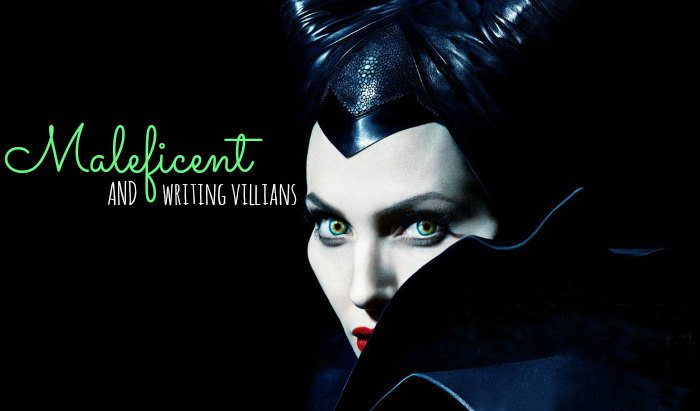
Maleficent and Writing Villains

maleficent-watch-first-trailer-movie-angelina-jolie

The other day my mother and I went to see Maleficent. In spite of not knowing much about the film going in, she and I both thoroughly enjoyed it. From the cinematography to the makeup to the characters themselves, everything was wonderful.


What captured my attention most of all was Maleficent.


Why?


Because she was portrayed as a sympathetic character rather than a one-dimensional villain.


I'll refrain from spoiling as much as I can. All you need to know is that in this version of the classic tale, we get much more of Maleficent's backstory. We see her as a young faerie and learn about the events that have hardened her heart. It is easier for us to understand her (otherwise questionable) actions because we know her past experiences and have a better sense of her wants and motivations.


Most importantly, Maleficent is dynamic. At the end of the film, she is a different woman than she is toward the beginning. Once again, I don't want to spoil, so that's all I'm going to say about that.


Maleficent was delightful, refreshing, and entertaining. While watching the film, I also learned a great deal about writing likable and three-dimensional villains. Whenever you want to add depth to your baddies, make sure they have a backstory, clear motive for what they do, and some kind of arc.


If the villain hasn't been changed by the events of the story, then what is the point for the story at all?


Have you seen the movie? What did you think? What do you think is the key to creating quality villains?


P.S. The 4 "A"s of Characterization, How to Develop Stronger Characters, and How to Get into Your Characters' Heads.

Friday, June 6, 2014

Twitter for Writers

Tweet Tweet

Twitter is one of the greatest under-utilized resources for writers at the moment. It's a great way to promote your work, communicate with other writers, find some writing advice, and have a fantastic time. I only recently started spending some serious time on Twitter, and I could kick myself for not using it sooner.


So why should you set up a Twitter account?


Well, this social media platform is a spectacular way to get your name out there and build up a following. You can promote your work, support other writers who want to promote their work, and link to content that you think other people might find interesting. I promote my blog posts and freelance work through Twitter and it's gotten me a lot more exposure than I would've gotten otherwise.


Twitter is also a great place to get in touch with other writers. I've met so many wonderful people on Twitter, most of them writers. They support my work and I support theirs. We talk about all things writing and non-writing. If you're not currently involved with groups of other writers, Twitter is the best way to meet like-minded individuals. Whenever I interact with other writers on the site, I feel as though there is a sense of community.


Another good reason to use Twitter? Writing advice. Seriously. There are so many amazing tips that get passed around for free. All you have to do is type "writing tips" or "writing advice" into the search bar and millions of helpful Tweets will pop up. The internet is truly a glorious place.


If you don't have a Twitter account, you need to sign up. If you already have one, you should be using it more. And you should definitely be following other writers (*ahem* ME). Tell me you followed me over from this blog and I will most likely follow you back.


What do you think of Twitter? How does it help you as a writer?


P.S Avoid Distractions While Writing.

Wednesday, May 28, 2014

Book Review: The Successful Novelist by David Morrell

Image

David Morrell is a genius.


There's no getting around that fact. After reading this book, I am more than convinced that this man has more writing talent in his pinky than I do in my whole body.


I digress.


When I mentioned on Twitter that Stephen King's On Writing is one of the most influential books about writing that I have ever read, someone suggested that I look up David Morrell's book The Successful Novelist: A Lifetime of Lessons about Writing and Publishing.


I'm delighted I did.


This book, like King's, provides a veritable treasure trove of knowledge regarding the craft and the business of writing. However, Morrell takes a much more practical approach, giving out advice for you to use in your daily writing sessions. King's book is largely memoir with some practical bits sprinkled in. On the whole, Morrell seems so much more approachable.


The Successful Novelist is suitable for writers of all skill levels. Whether you're just starting out or you've been writing for ages, this book is for you.


It's also short, succinct, and easy to read and understand. What more could you want?


Go out and pick up your copy today. This book will change your life.


Have you read this book? What did you think of it? What book would you like to see me review next?


P.S. Book Review: Adulting by Kelly Williams Brown.

Friday, May 23, 2014

3 Types of Scenes to Cut from Your WIP

Upturned Silhouetted Profile Against a Blue-Green Background


It never ceases to amaze me how much bad writing there is in the world.


Truly, when you think about it, you can most likely remember more poorly-written books you've read than well-written ones. Why is that? Bad prose tends to stick in our memory. Think of it as a kind of gruesome car accident--you know you shouldn't watch it, but you can't look away.


Bad writing is almost predictable in its awfulness. That is, there are several contributing factors to a poorly-written piece that can be seen almost across the board.


If you want to avoid bad writing, you need to avoid the factors that contribute to bad writing. One way you can do that is by cutting these scenes.


1. Mirror Scenes


Nothing in prose irritates me more than getting character description from a reflection. Most of the time, these scenes consist of a character peering into the nearest reflective surface--whether it be a mirror or a lake or even a spoon--and commenting on his or her appearance as though noticing it for the first time. How many times do you look in the mirror and look yourself over from head to toe, noting your "caramel-colored eyes" or "luscious red curls." Probably never. Honestly,there are better ways to reveal a character's appearance.


2. Dream Sequences


Oh, goodness. Dream sequences, for me, are right up there with mirror scenes. The only difference is that, unlike a mirror scene, a well-written dream sequence can serve the plot. For example, in Veronica Roth's Divergent, dreams form an integral part of the story. Unfortunately not all dream sequences are created equal. I've seen authors slip in dreams seemingly only for the sake of making word count. Don't do that. If you're going to use a dream, make sure it's relevant to what's going in in your story.


3. Commonplace Exchanges


I once read a novel in which a whole chapter was spent chronicling a trip to the grocery store. I wish I were kidding. If your scene or chapter doesn't reveal character or move the plot along, you're better off without it. No one wants to watch your protagonist picking out produce. We do that enough in our own lives as it is.


These are just three types of scenes that can be removed for the sake of strengthening your piece. I know there are others, but these cover most of the big-picture problems.


What types of scenes do you cut from your work? Do you agree with these three?


P.S. The Art (Not Science) of Chapter BreaksAvoiding Genre Fixation, From Daily Writing Tips: 34 Writing Tips That Will Make You a Better Writer, and Said Isn't Dead.

Monday, April 14, 2014

What the HIMYM Finale Can Teach Us About Writing

Image

I’ve been told a few times that I shouldn’t blog angry.


I’ve been sitting on this topic for a while, but I didn’t want to address it until my fury subsided. Since the How I Met Your Mother finale aired two weeks ago today, I think it’s time to write this post.


Some viewers enjoyed the HIMYM finale. An overwhelming majority did not. How can that be? It all comes down to writing--bad writing, really, with terrible choices. Die-hard fans of the show who had watched nine seasons of heartache, growth, and yearning felt betrayed to see relationships dismantled, plot lines overturned, and characters behaving inconsistently.


Clearly, the HIMYM finale has a lot to teach us about writing, especially what not to do. So, fellow writers, here’s a brief lists of don’ts, epitomized by the disappointing conclusion to a beloved comedy.


  1. Don’t dedicate an entire season to preparations for the wedding of two characters that end up divorcing almost immediately.

  2. Don’t force two characters together, spend one episode per season explaining why they aren’t right for each other, and then throw them back together at the end of the series.

  3. Don’t transform a womanizer into a monogamist and then back into a womanizer who doesn’t know the name of the woman who gave birth to his child (he doesn’t even make up a name, just refers to her as a number).

  4. Don’t kill the mother when the entire show is about meeting her.

  5. Don’t kill the mother.

  6. DON’T KILL THE MOTHER.

  7. While I’m at it, don’t build sympathy for a character and kill her offscreen as little more than a footnote. It’s cruel and will only make your audience resentful.

  8. Don’t have your protagonist continue to pine for the same woman even after he’s found the love of his life (he claims), married her, and lost her.

  9. Have a legitimate reason for the protagonist to divulge his past to his children.

  10. Don’t have your protagonist show up at The One That Got Away’s house with a nostalgic item to help win her back… and then imply that the woman will have him (of course). THEY ARE DIFFERENT PEOPLE THAN THEY WERE WHEN THE ITEM MADE ITS FIRST APPEARANCE. WHY WOULD YOUR PROTAGONIST TRY SOMETHING LIKE THAT?


Maybe I’m still blogging angry. I promise I’m not only trying to rant. I want you all to become better writers. You can do better than the How I Met Your Mother finale. You should.


After all, that show made it through nine seasons. Anything is possible.

Monday, March 31, 2014

Avoid Distractions While Writing

Weapons of Mass Distraction

One of the most difficult things about writing is avoiding distractions.


Sometimes the lure of social media is too strong to resist. For instance, while writing this blog post, I had to really force myself to concentrate on the task at hand instead of compulsively checking Twitter, Facebook, and Pinterest. I'll be the first to admit - it's tough to focus. Of course, the Internet is not the only evil in the world. When it comes to writing, you can also be distracted by a myriad of nuisances, such as pets, friends, family, the telephone, the television, and sometimes even the weather.


What's a writer to do?


If you're working on a project and don't want to be distracted, consider these tips to help you stay focused:


1. Disable automatic log-ins. If you know you have a tough time resisting social media, make it a little bit harder on yourself by logging out of your accounts before sitting down to write. Human beings are nototriously lazy. If you have to log-in before looking your ex-boyfriend up on Facebook, it might give you a moment's pause. Hopefully, with this added step, you'll realize you shouldn't be on social media and get back to work right away. But if not, you can always...


2. Block all time-wasting websites for the duration of your session. If logging out of your accounts isn't enough to deter you, download an app such as StayFocusd or Strict Workflow for Chrome, Leechblock for Firefox, SelfControl for Mac, or even Cold Turkey. Once you've discovered your demons, add them to the lists of sites to block, set a time to block, and let the program do the rest for you so you can focus on writing.


3. Turn. It. Off. This tip applies mostly to the computer but can be extended to all manner of technology. If you don't need it to write, power it down. If you write with pen and paper, you should be nowhere near your laptop. It shouldn't even be on. If you use a word processor, go ahead and write on your computer - just make sure to switch off your wifi. That way, if you're tempted to access the Internet, you'll feel guilty when you see that you're unable to connect. Sure, you could flip the switch back on just as easily, but for most cases, turning it off should be enough to stop you. The same goes for your cellphone - turn it off or silence it. Let everyone know how long you'll be working and tell them to leave a message if it's anything important. I promise you the world can do without you for an hour.


4. Write or Die. No, I'm not just being dramatic. Write or Die is a life-changing webapp that encourages you to reach a custom word count in a certain amount of time; say, fifteen minutes. If you slack off and stop typing for a long, the program punishes you with an unpleasant noise (such as "Mmmbop" by Hanson) and a bright red screen. Honestly that red screen scares me more than anything. I usually set my word count at 1,000 and the time period for an hour. I'm always amazed by how much I manage to accomplish. Check the program out.


5. Play some music. This tip isn't for everyone, but I've found that tuning into Pandora's "Classical Music for Studying" really does wonders for my productivity. If classical music isn't your thing, try to stick to some kind of music without lyrics for maximum concentration benefits.


There you have it: a few simple solutions to help you overcome distraction and make some progress with your project. Once you've made some headway, feel free to reward yourself with a social media or texting break. After all, you deserve it. Just make sure not to cheat and reward yourself early!


What do you think of these tips? How do you avoid distractions?

Saturday, March 22, 2014

From the Archives: Interview with Molly Ford, SP&A

516818391_0849517be5_z

I've been following Molly Ford's blog, Smart, Pretty, and Awkwardfor a few years now. I've loved every minute of it. The concept of the blog is simple: each post contains three bits of advice on how to be smarter, prettier, and (less) awkward. Since the simple things in life are often the most captivating, it is no wonder that Molly Ford is as successful as she is. Recently, I set up a couple of interview questions for Molly to answer. She was gracious enough to oblige. Here's how it went:


1. In your guest post on The Future Buzz, you talk a little bit about starting a blog. What are some tips you can give about blogging?


Great question. My best advice that I often give is the Three Month Rule: blog for three months without telling anyone. This gives you time to find your voice in private and confirm that you really like blogging, and it also gives your readers a back log of posts to read and fall in love with for when you do start going public and promoting your blog.


I would emphasize the importance, especially in the beginning while you are growing your audience, of writing consistently. Everything else—the layout of the site, social media promotion, press outreach, etc. can come later.


2. In that same article, you say, "I honestly thought the blog would just be a flash in the pan, just something else I would try, but after a month or so I realized how much I was liking it and just kept writing." What about blogging appeals to you the most?


I think what appeals to me most about blogging is the ability to share something from my heart to an audience that I hope benefits from my writing. I never write a tip that I don’t do myself or wish I had done, so everything I write feels very personal. I like that.


3. Also in the Future Buzz post, you discuss coming up with the idea for SP&A. Where did you get such a unique blog concept?


I honestly wish I had a better answer for this! I knew I wanted to write an advice blog because I don’t want to put super-personal information online, and because I enjoy reading self-help books. Just focusing on “How to be Prettier,” with beauty/fashion tips, was my first thought, but that type of advice wasn’t enough to cover all the topics I was interested in, so I added How to be Smarter. Then I wanted a third topic so the site name would flow well, so I added How to be (less) Awkward to round out the set. I was originally planning for the third section to be called How to be Awkward and have the tips be tongue-in-check and the opposite of what to do, but adding in the (less) made more sense in the long run.


4. Each post on your blog contains three pieces of advice and an inspirational quote. How do you usually discover these items?


I write down ideas for tips all day long. I keep a super long chain of notes in my phone, as well as in a physical notebook I carry around in my bag. I also usually keep a running draft email in gmail of links I’d like to use.


For the quotes, I usually search around for a quote either by a specific author or about a specific topic. Since the quotes are usually the most last-minute thing I include in the post, they are usually the most up-to-the-minute personal: for example, if at that moment I’m feeling happy about a good date or reading a book that references Eleanor Roosevelt, the quote will either be about happiness or relationships, or by Eleanor Roosevelt.


5. After reading the SP&A Press page, it's clear you've developed a following. How has your Internet presence affected your life?


I think about this a lot. I think having an Internet presence has probably affected how new people interact with me, but not the people I’ve known forever. Everyone googles everyone before first dates or job interviews now, so new people probably relate to me differently based on what they have seen online, but not the friends or people I’ve met in real life first or had pre-blog.


6.Based on your blog, you must be a very dedicated individual. How do you stay motivated?


Probably my best tip for staying focused is: no fluff. It it doesn’t add value or make me happy, I don’t do it. There’s just not time.


Probably the best example of no fluff in my life is that I also don’t watch (hardly any) TV. I don’t even own a TV or Netflix account or anything. I know it’s not a popular opinion to say that you don’t watch television, but I really think that not having that in my life leaves me with more free time, which I try to then use wisely.


7. Your About page says that you live in New York City. What are your favorite and least favorite things about living in the Big Apple?


I will cross the four-year mark of living in New York City this year, and I think I love it more than when I first moved here, which is saying a lot because I cried from happiness on my move-in day post-college. New York City is everything, the good and the bad. And there is probably nothing I could say that would be terribly unique to my experience about living here: it’s wonderful, it’s cultured, it’s full of events, it’s expensive, it’s loud, I live in a shoebox. But to paraphrase an email I sent in 2009 to a friend justifying my decision to live in NYC, “I might have anxiety from living in New York, but I would have much worse anxiety about not living here.” New York City is just the place for me. But I also want to be careful about over-romancing NYC, though: it’s not for everyone.


But I would wish for everyone a place they love as much as I love New York. You have to find your New York.


8. Most of your quotes come from famous individuals. Who are your personal role models?


I love Becky Quick from Squawk Box, Bethenny Frankel, and especially Nora Ephron, who has always been my main role model. I also closely follow Sheryl Sandberg’s career and Lori Gottlieb’s writings.


9. It's also clear that you enjoy reading. What are some of your favorite books?


I read mostly non-fiction, with a focus on business, pop psychology, and narrative non-fiction (memoirs, etc). Nora Ephron’s books have probably had the biggest impact on my life in my college and post-college years, but Malcolm Gladwell’s Outliers was also a huge influence to me when I read it. I saw Malcolm working in a coffee shop on the east side once, that was awesome. And of course I love Gretchen Rubin…


10. Finally, since you and I both enjoy The Happiness Project, what habits or practices have you created after reading Gretchen Rubin's book?


The Happiness Project was another total life-changing book for me, and I try not to use clichés like “life-changing” lightly. I just love the idea of small tweaks to make life better—that’s the sort of formula my blog is built around. One of my favorite quotes of the author’s, Gretchen Rubin, is that one of the Secrets to Adulthood is to “Be Gretchen.” I love that phrase: “Be Gretchen!”. She’s talking about it in the context of herself, obviously, but I love the idea of just doing you. There are many things I do that others probably would not enjoy, and vice versa. That’s okay. I just have to Be Molly. That’s really the only person that I can be realistically be 100% of the time anyway.


Molly Ford is such an inspiring woman. She's creative, kind, and self-reliant. As a role model and a person, I consider her to be someone worth admiring. If you've never read Smart, Pretty, and Awkwardgo check it out right now. Thanks, Molly!


What do you think of Smart, Pretty, and Awkward? What writers or bloggers should I interview next?


Click to tweet: Read @thecollegenov's interview with blogger @SmartPrettyAwk! http://wp.me/p2FPLe-EM

Monday, January 20, 2014

Where to Find Character Names

Image


A few years ago I walked into Goodwill with the intention of purchasing a gently-used sweater. I walked out with a baby name book that made my mother raise an eyebrow.


"Is there anything we need to talk about?" she asked.


I laughed and explained to her that I was going to use it to find names for my characters. She wasn't the only one I needed to explain my purchase to. Any time I whipped out the book, my friends, coworkers, and loved ones all wanted to know what use I had for it. If you're a writer, you need several resources for character names. While a baby name book is one example, there are several other options.


A close second to the baby name book is the baby name website. The internet is full of these; they're cropping up all over the place! Some of my favorites include Behind the Name, Baby Name Voyager, and Baby Names. These sites contain lists of popular names as well as the meaning, history, and origin of them. If you don't want to go out and purchase a book, you should utilize these free resources.


Here's a tip for names that I bet you've never heard: the next time you watch a television show or a movie, pay attention to the credits. Pick a first name and combine it with a different last name. Congratulations! You've named your character!


Another great method is to take a stroll through a cemetery and pick some names off headstones. If you don't feel comfortable using names that have belonged to people, mix them up like you did with the movie credits exercise.


One of the most difficult things about being a writer is knowing what to name your characters. Hopefully these free resources can help. Happy naming!


2

Monday, December 30, 2013

Lovely Links 12.29.13 - 01.04.14

Image

The first post of every month is going to be dedicated to extraordinary links I've gathered from various places on the Internet. Most of the links will have but one thing in common: they will be related to reading or writing. Other than that, who knows? Here's what we've got this week:

2

Monday, June 17, 2013

Guest Post: Lamar Hull from Direct4TV

110519-N-VA590-457


Writing tips for student athletes: Applying athletic principles to your writing

Being a college student athlete is tough. You've got to spend long hours practicing and, most importantly, you've got to learn to balance your time between school work and your sport. You may be set on continuing your sports career after college, but we all know sometimes things don't work out as planned, and that's why your college classwork is especially important. For a college athlete, building good writing skills can be nearly as vital as crafting your athletic ability.

Fortunately, learning writing skills isn't as hard as you may think – you can even apply some of the same principles from sports to your writing experience. Whether you're just trying to do well in school or you want to start writing your own novel, these tips can help make you a better writer.

Plan

Just like you'd plan goals for training, you can plan goals for schoolwork. Perhaps you could set a goal for a GPA you want to earn, a grade on a research paper or a word count for your personal writing. If you play on a team at school, you probably have set training and practice times. It's good to also plan out set times to do work and write every day. If you set time to devote to writing, you'll get in the groove of sitting down with your computer to write, and it will become a daily habit. And with more planning comes plenty of practice!

Practice daily

You've probably heard it a million times, but practicing is crucial for improvement. You wouldn't go a week without training, so don't go a week without writing. Try to write daily to better yourself and your skill. The more you write, the better you'll get – just like how running through more basketball or football drills can help you become a better player. Do you play a couple different sports? Try different types of writing, too. Become a well-rounded writer and athlete with plenty of practice!

Accept criticism and improve on it

No one is perfect, and you don't need to try to be. Improvement is a continual process, and you can't expect to magically become a better writer or athlete. You have to learn to take your criticism gracefully. Don't let things get you down – whether you don't play as well as you'd like in a big game or you don't get the high grade you wanted. It's important to keep trying and to work hard to keep getting better.

Even if you're not a student athlete, you can use these tips to improve your own writing skills. With some hard work, you can become a great writer, too!

Author: Lamar Hull is a former Davidson College student-athlete who loves to provide advice to college students and college graduates. Lamar currently writes for Direct4tv. You can follow Lamar @lamarhull20 and his youth basketball blog.

Monday, June 3, 2013

The Kurosawa Guide to Daily Writing

5315466573_b7da1e7c41_z
You don’t have time to finish your book.

Sure, when you started out, you imagined endless hours dedicated solely to banging away on your keyboard, producing The Next International Bestselling Novel. Now that reality has set in, however, you’re realizing that there aren’t enough hours in the day to get everything done. Between work, family, and social obligations, how can you be expected to find a minute of free time?

As writers, it’s important for us to write every day. The business of everyday life outside of writing can make it difficult to schedule time to get some serious writing done. You know you should be working on something, but you don’t feel like you have time to make any real progress. By utilizing the Kurosawa Method, you can finish your current project, no matter how little time you think you have.

The Kurosawa Method was developed by world-renowned writer and director Akira Kurosawa. He came up with a strategy for writing every day, no matter what. No matter how busy he was, he made a commitment to get down at least one page every day. One page is better than no pages, after all. This method works wonders. It’s easier to put your butt in the chair with such a small goal, and one page often turns into two, three, or ten before you know it.

Writing just one page per day is the ideal strategy for finishing your current project while juggling a busy schedule. All you have to commit to is a single page per day. If you write more, great; if not, that's fine, too. Writing a single page per day leaves you with 365 pages at the end of the year, which is certainly nothing to sneeze at.

Monday, May 27, 2013

Set the Mood with a Playlist

3170746448_09f903e23d_z
Music and creativity are inexplicably linked. Both stimulate the brain, trigger emotions, and inspire people all over the world. A writing tip I discovered lately is to listen to music while you write. Compiling a writing playlist can help you get more writing done by putting you in the mood to put fingers to keyboard or pen to paper. William Shakespeare wrote, "If music be the food of love, play on." Good ol' Willy Shakes. He knew what was up.

My favorite resource for creating playlists is Grooveshark. It's easy to use and has an attractive interface and a massive collection of songs and artists. They have every song that I've ever looked up. For the sake of this post, I'll show you what the playlist for my latest novel looks like.

In this playlist, each one of the songs relates to the tone, characters, setting, or theme of the novel in some way. I have this music on in the background when I'm working on my novel. It helps me get into the writing zone, so to speak, so that I can make some serious progress.

What do you think? What kind of music do you listen to when you write?

Monday, May 13, 2013

Getting Back into the Habit of Writing

4048982287_228cdc7d93_z

I found this post a few days ago that really resonated with me. For the past month or so, I haven't been writing every day -- shocking, I know. But I am human. If you, like me, have been neglecting your daily writing routine, here are some tips that will help you start writing again.
More than two weeks ago, I finished up a one-act play–I did the final edit, hit the deadline, then heartily congratulated myself.

In the days leading up to the deadline, I was writing 3+ hours each day in order to get the thing done (yes, I procrastinated a bit).  Once the piece was complete, a short reprieve from writing seemed to be in order.  My current internship started the following day, and now that few days has grown into nearly 3 weeks.  Not cool.

For me, writing is a lot like exercise.  When I’m writing most days of the week, and making progress toward my goals, I feel great.  When I skip days–or weeks–I grow grumpy and lethargic.  Everything is terrible and I don’t know why.  By the time I figure out that my lack of exercise is causing my terrible mood, I’ve usually reached the point where I’ve lost all motivation to write ever again.  It is only through a combination of guilt and restlessness that I finally put on my sneakers and go for a run.

The first days getting back into a routine are rough but necessary.  Here are some things I do to create momentum in my writing life.

  1. Forgive yourself.  Writerly guilt got you sitting at the desk; now forget about it so that you can immerse yourself in your story’s world.  Otherwise, your session will be plagued by the conviction that your writing is shit and so are you.

  2. Set a concrete, measurable goal.  ”Write.” is not concrete enough to put on your to-do list.  Give yourself a word or page count goal (“I won’t get up from this chair until I’ve written 1,000 words.”), or tell yourself that you’ll write for the next hour.

  3. Schedule it.  If you decided on a time goal, fit that block of time into your calendar, and write it down.  Don’t schedule anything else during that time.

  4. Write somewhere else.  Writing somewhere you usually don’t can be an easy fix when a blank page seems daunting.  This could mean finding a park bench or coffee shop on the opposite side of the city, or it could be as simple as moving to the couch if you usually sit at a desk.

  5. Write sometime else.  If you usually write before bed, try waking up early.  Make yourself a cup of coffee and write as the sun rises.  If you’re a morning writer, sleep in one morning, and stay up writing late that night.

  6. Re-read.  Look through your previous writing beforehand to get yourself excited about what you’ve done in the past, and to get back in touch with your characters and setting, if it’s a longer piece.

  7. Start Slow.  Ease into it by using your first writing sesh to brainstorm or outline.

  8. Start Small.  Begin working on something bite-sized first, if you’ve been away a super long time–a character sketch, vignette, flash fiction.  Try a six-word story if you’re really struggling.

  9. Minimize distractions.  Turn off the internet.  Don’t sit in the library with your friends and don’t sit in a busy coffee shop, unless those are environments that you’ve thrived in previously. Isolate yourself in a room without windows, if you must!

  10. Tunes. Listen to music that fits the tone of your piece–this can help you get into the proper mindset, and the words may flow more easily.

  11. Don’t censor.  You’re returning to writing, so your prose will not be very polished.  That’s what second (and third! and fourth!) drafts are for.  Focus on the quantity of words rather than the quality, or challenge yourself to write for fifteen minutes straight without taking a break (perhaps use a web app like Write Or Die).

  12. Start writing now.  No really, like rightnow. Write the next sentence of the story you’ve been away from, or write the first sentence of a new one.  Then write another sentence.  And another.


As you can see, getting back into the habit of writing is mostly just about getting to work. There aren't really any tricks -- just sit down and start writing.

What do you think? What do you do for your writing routine?

Monday, April 29, 2013

4 Unexpected Places to Find Writing Jobs

6869768383_84f708306e_z


The world of freelance writing is a gratifying, albeit frustrating, career path to pursue. I've been getting paid to write for various websites for three years now. Not only do I get a little pocket change--freelance work also allows me to put my name out for other potential clients and employers to see. If you want to look into doing freelance work, here are four unexpected places to conduct your freelance writing job search.


  1. ElanceOkay, maybe this site isn't extraordinary. It's standard fare for most freelancers. Still, Elance is a great place to start looking for work. Clients and employers post jobs for freelance writers to bid on. If your bid wins, you get the job. For each job you complete, your rating goes up, which could lead you to even more work.

  2. CraigslistHear me out. Although Craigslist can be unsavory at times, it's still a decent source for tracking down freelance writing jobs. You can either post your resume or apply for one of the jobs in the writing/editing section. You never know what could happen.

  3. RedditOnce again, I can feel you shaking your head. I got my current job from Reddit. Post your resume to r/forhire or r/hiring and see what comes up.

  4. Ed2010. This site is the writing world's best-kept secret. Ed is the only site with jobs and internships geared toward those who are serious about writing. Check it out.


These are just a few resources to get you started on your way to a career in freelance writing. Be persistent, patient, and passionate about looking for work, and you'll be hired in no time.

What do you think? How do you find freelance writing jobs?

Tuesday, December 11, 2012

Selections from Pixar's 22 Rules for Storytelling

tumblr_m5yyqloJkV1qg50npo1_500


Note: This information comes from the following article. I cannot take credit for any of these rules.


When I stumbled on Pixar's 22 Rules of Storytelling, I realized the company knows exactly what they're doing. It's clear to me now why Pixar is the leading contender when it comes to film and animation. Here are a few of my favorite points:
#2: Keep in mind what's interesting to you as an audience, not what's fun to do as a writer. They can be very different.

#7: Come up with your ending before you figure out your middle. Seriously. Endings are hard. Get yours working up front.

#9: When you're stuck, make a list of what wouldn't happen next. More often than not, the material that gets you unstuck appears.

#15: If you were your character, in this situation, how would you feel? Honesty lends credibility to unbelievable situations.

#19: Coincidences that get characters into trouble are great. Coincidences that get them out of it is cheating.

#22: Putting it on paper allows you to start fixing it. If a perfect idea stays in your head, you'll never share it with anyone.

These are just a few of the excellent tips Pixar offers about storytelling. Interested? Read them all. You just might learn something.


What do you think? What is your favorite storytelling tip?


Related Posts Plugin for WordPress, Blogger...