- Vlog: How to Make Your Villains Awesome
- 4 Steps to Loving Marketing--And Your Readers
- 12 Writing Mistakes Nearly Everyone Makes
- The Period is Pissed
- Guest Post: The Importance of Layers
- A Book is the New Business Card
- 5 Ways to Get Motivated and Inspired
- How to Write a Novel
- Keep It Simple: Keys to Realistic Dialogue (Part II)
- Too Busy to Write a Book? Write a Poem
Wednesday, July 30, 2014
Lovely Links 07.30.14-08.06.14
Friday, July 4, 2014
Why You Should Use Wattpad
![]() |
| Photo by Ed Yourdon on Flickr |
Wednesday, July 2, 2014
Book Review: Next Year, Things Will Be Different
| Photo Credit: Designed by Starla |
- Next Year by Tyramir Ross. Walker may not have finished high school yet, but he and his team are certainly finishing off every one of the G'laek they can. Now they face one of the oldest and most powerful of the ancient demons they have encountered. Can Walker use the power granted to him in Quellios of the Rising Waves, the great staff that conjures fire, as well as his own brains to save himself and his friends?
- Illusion Of Choice by John Biscarner. When given the chance to have everything your heart desires, what would you ask for? Many of us have thought of what we would ask for, but have we ever really thought about the consequences of said wishes? Darren, a young teen, has been asked a simple question: "What do you want from life?"
- The Garbage Man's Boy by J.C. Sayer. In the 1950s, the small northern Ontario town of Mallieu was terrorised by a serial killer named the Ferry Man. Ron, the Garbage Man's Boy, navigates small town politics in the wake of these murders, finding hidden truths he probably shouldn't have found, while trying to protect the ones he loves from a terrible fate.
Monday, June 30, 2014
Lovely Links 06.30.14 - 07.06.14
| Photo by Berit Watkin on Flickr |
June felt like just a flash in the pan. Where did the time go?
Here are this month's links:
- 5 Lessons for Writers from The Fault in Our Stars
- How to Silence Your Inner Critic
- How to Conduct an Author Interview
- The Love Triangle
- My Top Four Tips for Writing Awesome Articles (That You're Probably Ignoring)
- Why Your Writing Sounds Weird (And What You Can Do About It)
- The Dreaded Mirror Scene
- 5 Creative Writing Prompts to Break Your Writer's Block
- Should I Major in Creative Writing?
- The Cure for Bland Characters
What do you think of these links? What other articles or resources should I be aware of?
Saturday, June 28, 2014
Affect vs. Effect
| Photo Credit: Flickr |
This time, I'll be covering the difference between affect and effect. I'll try to keep it simple.
Affect is most often used as a verb. It means "to influence" or "to act in some disingenuous way." For example:
The average rainfall affects how much the plants will grow.Effect, on the other hand, most often makes an appearance as a noun. You can think of it as another word for "result." Consider the following:
When asked about her husband's murder, she affected grief.
The sun's ultraviolet radiation can have several negative effects on your skin.Sometimes, however, the rules for affect and effect can change (Isn't grammar maddening?). Although affect is usually a verb, it can be used as a noun when talking about psychology because you can never truly understand what another human being is feeling; only how they seem to be feeling. For instance:
She showed a frustrated affect.Likewise, the word effect can sometimes manifest as a verb. In this case, you can interpret it to mean "to bring about" or "to cause." Check out this sentence:
The seminar effected donations for the local food pantry.Grammar is confusing. There are so many rules and exceptions that sometimes it all feels overwhelming. That's why I want to help.
How do you remember the difference between these two? What other grammar topics do you struggle with?
Wednesday, June 25, 2014
Writing Quick Tips: How to Write Something Every Day
| Photo Credit: Flickr |
Today's tip has to do with writing something every day. I know I've mentioned the importance of daily writing several times before, but I'll mention it again. Your writing will absolutely not improve unless you're working at it every day.
With that in mind, however, sometimes it's difficult to fit writing into our busy schedules. No matter how we try to carve out time to write, the day slips out from under us. We fall into bed without having written a single sentence.
Here's the key to making sure you write something every day: Don't go to bed until you've met your goal. Do not get under the covers or let your head hit the pillow until you are finished.
Let sleep serve as motivation to get through your session. You may be sleep-deprived, but you will do the work.
What do you think of this tip? What others would you like to see?
Monday, June 23, 2014
Top 5 Must-Read Classics
| Photo Credit: Flickr |
- The Great Gatsby by F. Scott Fitzgerald. If you haven't read this book yet, what's taking you so long? This novel has some of the most captivating description and imagery that I've ever read. I'm also a fan of Fitzgerald's characters. Every one of them is clearly flawed yet still sympathetic. Read this book!
- Nineteen Eighty-Four by George Orwell. Orwell's world-building skills are spectacular. He takes a world we think we know and turns it on its head, to terrifying effect. This novel is one of the earliest examples of a dystopian society in literature, too. If you like The Hunger Games and Divergent, you have Orwell to thank. Plus, after reading this book, you can correct everyone who thinks Big Brother is watching him or her.
- Rebecca by Daphne du Maurier. This novel is highly psychological and wonderful to read. It's in the same vein as Jane Eyre though a little less intimidating because it's more modern. I couldn't put this book down, and the twist... well, let's just say it will definitely keep you guessing. This novel is suspenseful, dramatic, and one of my all-time favorites.
- The Picture of Dorian Gray by Oscar Wilde. In his only novel, Wilde seamlessly mixes wit and humor with serious drama. It illustrates concepts of morality without being preachy and is overall one of the best books I can think of. Check it out.
- Jane Eyre by Charlotte Bronte. Like The Great Gatsby, Jane Eyre is a novel you've probably read already. Still, I would encourage you to read it with new eyes. It presents the Gothic romance and the Byronic hero in ways that echo even in the present day. Read it.
These are just a few classic books that I think you should read. Hopefully these novels will mark the beginning of your journey into classic literature.
What do you think of these books? How has reading helped you become a better writer?
Friday, June 20, 2014
That vs. Which
| Photo Credit: Flickr |
Is all wine expensive? No, just wine imported from France (as far as this sentence is concerned). Therefore, that is the best choice to maintain the integrity of the sentence. If we take out the word that and replace it with which, the whole meaning of the sentence is changed. Check it out:Wine that is imported from France is expensive.
Wine, which is imported from France, is expensive.
Plants, which generate energy through photosynthesis, need a certain amount of sunlight to survive.
Tuesday, June 17, 2014
Coffee Shop Etiquette for Writers
Photo credit: Zach Inglis on Flickr[/caption]I love writing in Barnes & Noble.
There's a big one in my hometown with a little Starbucks in it and I love to sit down there and get some work done. There's nothing like being surrounded by books and inhaling the scent of fresh roasted coffee while pounding away on my laptop.
I spend so much time in coffee shops that I've noticed an unspoken code of behavior for working from a coffice (coffee shop office). If you like working in coffee shops, there are a few rules you should follow.
Share Your Space
Stick to the one chair per customer rule. Your butt gets a chair. Put your stuff on the floor. Don't hog the seats. Also, if you're sitting at a table and the coffee shop is busy, don't spread your stuff out all over the place. Share the table. Basic stuff.
Buy Something!
If you're sitting in a coffee shop, you're a customer. It's your duty to purchase something. You should be buying a drink or snack every ninety minutes to two hours. If you don't want to buy anything, try to keep your visit to an hour or less - just know that you're disrespectful for using the space without giving back,
Be Kind to Other Customers and Workers
Most coffee shops have tip jars. I encourage you to use them, especially if you spend a lot of time in that particular location. If someone asks you to watch their stuff, watch their stuff. If you need to listen to something, bring headphones. Take calls outside. Don't hog power outlets. Here's a bright idea - bring your own power strip and make some new friends.
When it comes to writing in coffee shops, these are some simple rules for human behavior to follow. It all boils down to this: don't be a jerk.
Do you like writing in coffee shops? What are some other unspoken rules for working there that you can think of?
Tweet tweet:
The key to coffee shop etiquette for writers? Writer @thecollegenov says, "Don't be a jerk." (Click to tweet)
Monday, June 16, 2014
Watch Your Mouth: Tips for Writing Profanity
Many writers worry about putting swear words in their writing. For one reason or another, I’ve had several people tell me that they want to keep curse words out of characters’ dialogue. I believe in using profanity, but only when it’s needed. Cursing works well if it’s done correctly. Check out these tips for writing swear words without going overboard.
Moderation is Key
I can’t tell you how many times I’ve heard someone say, “I enjoyed reading the book, but there was too much profanity. It was distracting.” When it comes to using swears, a little goes a long way. When every other word sounds like sailor speak, you’ve ventured into dangerous territory. Try to use profanity only when it feels absolutely necessary.
Diction Reveals Character
The words that your characters use say a great deal about them. If a character would swear, let him swear; if not, you shouldn’t force it. In one of my short stories, a woman preaches against profanity and disciplines her son whenever he uses “off-limits words.” However, when the woman finds out that her husband is missing in action, she is so shocked that she curses: “You’re shitting me… what the hell does ‘missing’ mean?” In this example, the shift in diction shows the woman’s inner turmoil.
Consider Your Audience
You should probably steer clear of using foul language if you’re writing a novel for the Christian fiction market. Likewise, if you’re writing YA, make sure you’re aware of profanity guidelines. For example, words like f***, g*d***, c***, and m*****f***** are hot-button swears that a lot of YA publishers would prefer not to see. Also, just so we’re clear, Go the F*** to Sleep, is not actually a children’s book (though it is hilarious).
When in Doubt, Take It Out
If you don’t get the warm fuzzies reading something you’ve written, make some cuts. Most likely, your work won’t suffer if you take out some bad words.
You’re more than welcome to use profanity in your writing. Don’t let anyone tell you otherwise. The key is making sure you don’t use them excessively. Keep these ideas in mind the next time you write swearing and you should be good to go.
How do you feel about reading profanity? What about writing it?
Tweet tweet:
Afraid your swearing will scare off readers? Writer @thecollegenov has some advice about profanity. (Click to tweet)
Friday, June 13, 2014
Between vs. Among
| Photo Credit: Flickr |
As writers, good knowledge of grammar can only help you in your writing projects. I always assume that everyone has the same grasp of basic grammar rules as I do, but you know what they say about assuming things.
When I was in high school, a woman named Mrs. Landreth taught me everything I know about grammar. In fact, I still refer to the notebook I kept in her class. Not everyone has a Mrs. Landreth. I guess that's where I come in.
One of the easiest grammar lessons I can teach you is the difference between (ha) the words between and among.
You should use the word between when referring to two subjects. For instance: Mr. Brown lives between Mr. Pink and Mrs. Gray.
In contrast, you should use the word among when three or more different subjects are concerned. For example: "Always shoot for the moon. Even if you miss, you'll land among the stars."
Pretty simple, right?
What do you think of this little grammar lesson? What other grammar questions would you like to see answered?
Tweet tweet:
When should you use "between"? What about "among"? Writer @thecollegenov has the answer. (Click to tweet)
Wednesday, June 11, 2014
Writing Quick Tips: Remove Names from Dialogue
Photo credit: Pedro Ribeiro Simões on Flickr |
"Sarah," Brad said, "don't you think this is a good idea?"
"No, Brad," Sarah said.
"Why not, Sarah?"
"Because, Brad, we're both married. Besides, Brad, we're first cousins. Think of the inbred children."
"Sarah," Brad said, "don't you think this is a good idea?"
"No," Sarah said.
"Why not?"
"Because, Brad, we're both married. Besides, we're first cousins. Think of the inbred children."
.@brianawrites shares a quick tip for improving dialogue. (Click to tweet)
Monday, June 9, 2014
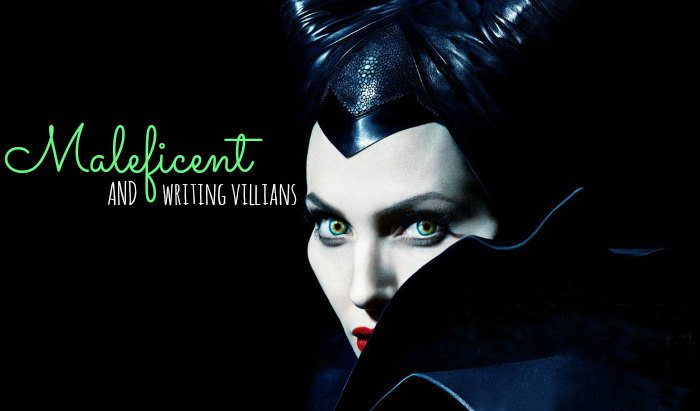
Maleficent and Writing Villains
The other day my mother and I went to see Maleficent. In spite of not knowing much about the film going in, she and I both thoroughly enjoyed it. From the cinematography to the makeup to the characters themselves, everything was wonderful.
What captured my attention most of all was Maleficent.
Why?
Because she was portrayed as a sympathetic character rather than a one-dimensional villain.
I'll refrain from spoiling as much as I can. All you need to know is that in this version of the classic tale, we get much more of Maleficent's backstory. We see her as a young faerie and learn about the events that have hardened her heart. It is easier for us to understand her (otherwise questionable) actions because we know her past experiences and have a better sense of her wants and motivations.
Most importantly, Maleficent is dynamic. At the end of the film, she is a different woman than she is toward the beginning. Once again, I don't want to spoil, so that's all I'm going to say about that.
Maleficent was delightful, refreshing, and entertaining. While watching the film, I also learned a great deal about writing likable and three-dimensional villains. Whenever you want to add depth to your baddies, make sure they have a backstory, clear motive for what they do, and some kind of arc.
If the villain hasn't been changed by the events of the story, then what is the point for the story at all?
Have you seen the movie? What did you think? What do you think is the key to creating quality villains?
P.S. The 4 "A"s of Characterization, How to Develop Stronger Characters, and How to Get into Your Characters' Heads.
Friday, June 6, 2014
Twitter for Writers
Twitter is one of the greatest under-utilized resources for writers at the moment. It's a great way to promote your work, communicate with other writers, find some writing advice, and have a fantastic time. I only recently started spending some serious time on Twitter, and I could kick myself for not using it sooner.
So why should you set up a Twitter account?
Well, this social media platform is a spectacular way to get your name out there and build up a following. You can promote your work, support other writers who want to promote their work, and link to content that you think other people might find interesting. I promote my blog posts and freelance work through Twitter and it's gotten me a lot more exposure than I would've gotten otherwise.
Twitter is also a great place to get in touch with other writers. I've met so many wonderful people on Twitter, most of them writers. They support my work and I support theirs. We talk about all things writing and non-writing. If you're not currently involved with groups of other writers, Twitter is the best way to meet like-minded individuals. Whenever I interact with other writers on the site, I feel as though there is a sense of community.
Another good reason to use Twitter? Writing advice. Seriously. There are so many amazing tips that get passed around for free. All you have to do is type "writing tips" or "writing advice" into the search bar and millions of helpful Tweets will pop up. The internet is truly a glorious place.
If you don't have a Twitter account, you need to sign up. If you already have one, you should be using it more. And you should definitely be following other writers (*ahem* ME). Tell me you followed me over from this blog and I will most likely follow you back.
What do you think of Twitter? How does it help you as a writer?