Image Map

Monday, April 29, 2013

4 Unexpected Places to Find Writing Jobs

6869768383_84f708306e_z


The world of freelance writing is a gratifying, albeit frustrating, career path to pursue. I've been getting paid to write for various websites for three years now. Not only do I get a little pocket change--freelance work also allows me to put my name out for other potential clients and employers to see. If you want to look into doing freelance work, here are four unexpected places to conduct your freelance writing job search.


  1. ElanceOkay, maybe this site isn't extraordinary. It's standard fare for most freelancers. Still, Elance is a great place to start looking for work. Clients and employers post jobs for freelance writers to bid on. If your bid wins, you get the job. For each job you complete, your rating goes up, which could lead you to even more work.

  2. CraigslistHear me out. Although Craigslist can be unsavory at times, it's still a decent source for tracking down freelance writing jobs. You can either post your resume or apply for one of the jobs in the writing/editing section. You never know what could happen.

  3. RedditOnce again, I can feel you shaking your head. I got my current job from Reddit. Post your resume to r/forhire or r/hiring and see what comes up.

  4. Ed2010. This site is the writing world's best-kept secret. Ed is the only site with jobs and internships geared toward those who are serious about writing. Check it out.


These are just a few resources to get you started on your way to a career in freelance writing. Be persistent, patient, and passionate about looking for work, and you'll be hired in no time.

What do you think? How do you find freelance writing jobs?

Monday, April 22, 2013

Pen versus Keyboard: A Pros and Cons List

desk

One of the most prevalent dilemmas in the world of writing involves the method used to compose novels, short stories, essays, blog posts, poems, and scripts. Should you write your project out on paper or type it up on your computer? Fitzgerald and Wilde didn’t have much of a choice. Stephen King most certainly has a computer, yet he chooses to draft his pieces by hand first. Some people judge other writers by the method they use to write their first drafts. In this article, I’ll be listing the pros and cons of writing longhand versus writing shorthand. It’s up to you to decide which method works better for you as a writer.

Let’s talk about good ol’ fashioned pen and paper. The majority opinion of writers everywhere is that writing longhand allows you some freedom for pretention. Practically-speaking, there are several things to consider about writing your first draft on paper. It increases your focus, removes a majority of Internet- and computer-based distractions, cannot crash or freeze or be lost as easily, and is much more thoughtful on the whole. At the same time, writing on paper is hard work, can be time-consuming, and is difficult to search through when looking for a specific passage or scene.

Typing your draft may seem like the better solution for most writers, but there are two sides to this idea. Writing on the computer allows you to edit as you go along, backup your work, save it to access remotely when away from your computer, write more quickly and easily, search documents with ease, and automatically calculate word count. Some problems with writing longhand include the possibility for distractions, losing data to crashes and freezes, and less planning and forethought.

I’m writing this article on the computer—not because it’s better, but because typing my work is easier for me. I type much faster than I write. I’ve written this article hoping that you’ll use it to make your own educated decision about which method to use. Ignore people who try to judge your talent as a writer based on whether you write or type your work. Those people are silly. Content matters more than method.

Monday, April 15, 2013

Immerse Your Readers in Your Setting

meadow

Imagine yourself in the middle of a meadow on a summer afternoon. Hear the soft buzz of the bumblebee, the rush of wind-blown grasses, and the trickle of a nearby stream. Feel the warmth of the sun on your face. Taste the tart sweetness of the lemonade you sip from the glass in your hands. Feel the chill of the ice in the glass as condensation slides down the sides of it. See the sky—impossibly blue, bright, and cloudless. Reach out to touch the smooth wooden railing of the front porch.

Come back to the present.

Were you in the meadow?

As writers, one of the hardest parts of our job is convincing our readers to dive into our stories. We want them to become fully immersed in the worlds we’ve created. We want them to see, hear, taste, touch, and smell the reality of what we’ve put on the paper. Characters, dialogue, and plot are important, but setting is what makes the prose come alive for the reader. You want to get your audience hooked? Develop a fully-dimensional setting.

Start with sight. When you walk into a room, sight is the first sense activated in the brain. You notice what’s in front of you because it’s at eye level. The same should be true in your writing. If you want your audience to be in the desert with your characters, show them sand, cacti, and perhaps a snake. Once you develop sight, you can move on to the other senses.

Hearing should come next. What do you want your readers to hear? Rushing water? Crackling fire? The dull roar of a crowd? Whatever it is, be sure to describe it in as much detail as possible. Be unique. Find fresh ways to describe the soundscape of your setting to grab the audience’s attention. The readers will feel like they’re more involved in the story if they can see and hear what’s going on.

Smell is the sense with the closest ties to memory. A single scent can be powerful enough to take you back in time all the way to your childhood. For me, that scent is chlorine. I grew up in Florida surrounded by pools. The smell of chlorine is all it takes to bring my mind back to summers spent splashing around with my friends. Describe the smells inside your setting. Use sweet, fresh smells to evoke pleasant feelings and acrid, strong smells to evoke unpleasant ones. Smell can do a great deal in bringing out your setting.

Touch. How does your character interact with the setting? Give the reader the same experience. If he's petting a cat, let your reader feel the soft fur of the animal's back. If he's touched a hot stove, describe the sharp pain of the hot burner. Touch is a sensory detail that is often left out. I would encourage you to utilize it whenever and however you can.

Taste is arguably not as essential as the others, but nevertheless, it is worth mentioning. We are not constantly tasting things. The same is true for your character. If he is walking down the street and not eating or drinking anything, you don't need to tell us anything about taste. If he's digging in at an all-you-can-eat buffet, the reader is going to be much more interested in how everything tastes. Use taste when it makes sense to draw your readers in.

Utilizing the five senses is one way out of many to encourage your readers to dive into the world of your story. Sight, smell, hearing, taste, and touch can make your setting come alive. Armed with this knowledge, you should be able to put your audience right where you want them--an encourage them to stay for longer than they'd had in mind.

Monday, April 8, 2013

Finding the Right Title

books
The most important aspect of writing a book is the writing, of course.

Once the first draft, second draft, and final draft are down, though, a writer's work is far from over. No matter how much or how little progress you've made on a piece of writing, the nagging title quandary is impossible to ignore. The title is what pushes readers away or pulls them in before they even put their hands on the book. It's the first impression that shapes the way your reader's frame the content of the novel.

Basically, it's a massive deal.

If you're having a hard time coming up with the title of your latest work, consider these tips.

1. Use a character's name. The name need not belong to the main character of the work, but that certainly helps. Examples: Dracula, Frankenstein, Moby Dick, Carrie, and Jane Eyre.

2. Use an important symbol or motif from the work. Make sure it's significant. Examples: The Bell Jar, The Grapes of Wrath, The Scarlet Letter, Pride and Prejudice, and The Glass Menagerie.

3. Use a quotation. You can pull one from the work itself or make an allusion to another literary work. Examples: Brave New World, A Time to Kill, Down to a Sunless Sea, Dying of the Light, and Things Fall Apart.

4. Use the main conflict. Don't give too much away. Examples: The Old Man and the Sea, Harry Potter and the Prisoner of Azkaban, The Curious Incident of the Dog in the Night-Time, Percy Jackson and the Lightning Thief, and Love in the Time of Cholera.

Choosing a fitting title is a difficult yet rewarding task for nearly every writer. Armed with this advice, you should be on your way to the title of your dreams.

Tuesday, April 2, 2013

Unexpected Sources for Writing Inspiration

inspiration
When you write all the time, it's easy to feel like every concept in the universe has already been exhausted. I understand your pain. If you think your idea pump could use a good priming, you might want to start thinking outside the box. Here are a few unexpected sources of writing inspiration.

PostSecret is one of my favorite places to get story ideas. This website "is an ongoing community art project where people mail in their secrets anonymously on one side of a homemade postcard" (PostSecret). The secrets range from trivial to life-changing in significance and are accompanied by pictures that may or may not relate to the confession. When I want inspiration, I look here first. Sometimes you can get plot situations from here, but more often than not, you'll come away with at least some interesting character quirks.

You can also find ideas from magazine article titles. This method works better for creative nonfiction, but if you get creative, you can still apply it to your short stories and novels. I wrote a piece not too long ago titled "Five Ways to Make Him Stay" about a troubled marriage. The title came straight from Cosmopolitan. You can also get ideas from news headlines, which tends to be my preference.

Another excellent source for writing inspiration is the re-imagination of actual events--whether from your life or from someone else's. This method can also be very therapeutic.Take an encounter and turn it on its head. How could the event have happened differently? What could have been some of the consequences?

If you're still having troubles finding idea, consider this model to set up a story:
A _____ wants _____, but ____ gets in the way.

This model is the one I use for most of my stories. My most recent short story, "Teacup," looks something like this:
A creative writing professor wants to have a romantic relationship with a pretty girl, but the fact that she's a student gets in the way.

This format is very basic, but it can be surprisingly helpful. The same is true of the preceding methods. The next time your mental well is running dry, poke around one of these unconventional sources of inspiration.

Tuesday, March 26, 2013

The Art (Not Science) of Chapter Breaks


The Art (Not Science) of Chapter Breaks
One of the most popular questions I get from other writers involves the idea of chapter breaks. Many writers feel like there is a certain industry standard dictating where, when, and how a person is supposed to break a chapter. This notion is ludicrous. 


In this post, we'll discuss the concept of scenes, the "right" time to break, and where and how to pull off a successful chapter break.
In the writing world, scene is a term that gets thrown around without much explanation. A scene is simply the smallest meaningful unit of a work of prose such as a novel or a short story. 

While most writers craft chapters containing several scenes, there is nothing wrong with devoting an entire chapter to a single scene as long as that scene contains a clear conflict with a beginning, a middle, and an end. The conflict should be introduced at the beginning, deepened in the middle, and solved or further complicated at the end. The best way to look at scenes is by considering them as miniature short stories. Practice developing well-crafted scenes.

Now that we have an idea of scenes, we can talk about the notion of a "right" time to break a chapter. There is no such thing. I don't know where such an idea got started, but it's only a myth. When it comes to ending one chapter and moving onto the next, you should go with what feels natural. As long as you're consistent, your readers won't mind.

When it comes down to it, the best advice I can give you for breaking chapters is to go with your gut. You know the story and you have an idea of the flow. Another tip I have is to insert a chapter break where a commercial would go if your novel were a show or a movie on television. Commercial breaks create suspense and keep the audience tuned in to see what happens next. When you're ready to move on to the next chapter, lead in with a bit of dialogue, reflection, or action that creates curiosity for what comes next.

Writing scenes and breaking chapters isn't all that difficult. With a bit of practice, hard work, and instinct, you'll be breaking with the best of them.

How do you break your chapters? Do you prefer them to be long or short?

Monday, March 18, 2013

4 Nonfiction Books Every Writer Should Read

7971882788_bf612f4177_z
When it comes to writing well, one of the best tips I can give you from improving your work is to read books about writing, especially by authors who have been successful. There are many nonfiction books about writing, but these four are the best of the best. If you want to get better at the art of writing, read these books.

On Writing by Stephen King is the absolute best. Part memoir, part master class, this book is one of the greatest things I've read, period. In addition to the basic elements of craft and technique, King also offers a crash course on grammar. King's book serves as excellent inspiration and motivation as well. Every writer should read this book.

Anne Lamott's Bird by Bird is a step-by-step guide on how to write and how to manage the writer’s life, based on personal experience. She shares what it takes to be a writer with a unique voice that is both honest and funny.

The Elements of Style by William Strunk, Jr. is the most indispensable writing resources on the market to date. Strunk's best advice is to "Omit Needless Words," but there are plenty other topics addressed inside the book. Overall, this book offers guidelines for effective and convincing writing.

Zen in the Art of Writing by the late Ray Bradbury is guaranteed to make you think about what it's like to write for a living. In addition to offering practical tips, Bradbury also celebrates the act of writing. According to him the success of a write depends mostly on how well the writer knows his or her own life. This book is definitely worth sitting down with.

These books will not only entertain you, but also improve your capability as a writer. If you haven't read any of them, do it right now. You'll be thrilled that you did.

What do you think? What books did I miss?

Sunday, March 10, 2013

Writing Cover Letters for Literary Journals

cl
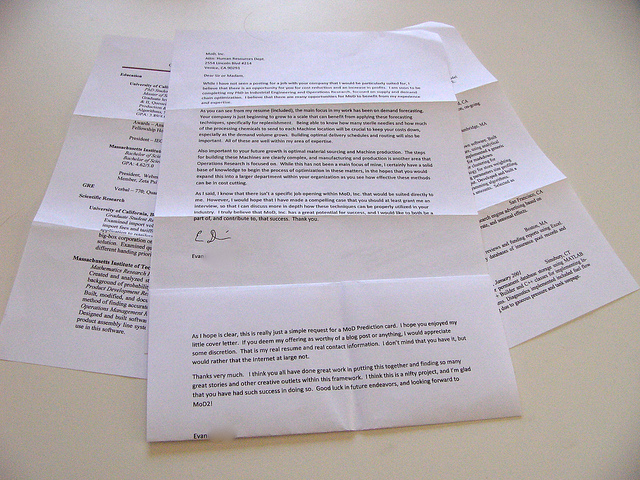
In the modern era of self-publishing, the notion of writing a cover letter may be a foreign one to you. Most literary journals and magazines that allow submissions expect you to submit a cover letter along with your short story, poem, or essay. The cover letter serves as an introduction of your work as well as your identity as a writer. It can bridge the gap between publication and rejection. Writing a cover letter is one of the most important things you can learn to do correctly. Here's a handy guide to insure your next cover letter receives the attention your hard work deserves.

I've prepared a sample cover letter to give you an idea of the finished product:

Kelly Wright
Fiction Editor
Feature Story Magazine
123 Lane Street
Anytown, State, Zip

Dear Kelly Wright,

Please find enclosed my short story “Glue.”

I live in suburban Georgia, where I work as a student and a freelance writer.

I enjoy reading Feature Story Magazine and am hopeful that you’ll find my story to be a good fit.

Thank you for your consideration.

Sincerely,
Briana Morgan

We can break this letter down into several different points for emulation.

  • Find out the editor's full name, and use it in your salutation

  • Your cover letter doesn't need to grab the editor's attention. Your work should be strong enough to speak for itself

  • Pay attention to spelling and grammar rules--the way you handle punctuation says a lot about your writing chops

  • A cover letter isn't the same as a query, so you shouldn't summarize your work

  • When submitting fiction or poetry, you don't need to connect the work to your personal experience

  • There's no reason to mention whether you've been published or not

  • It's okay to add some information about yourself, but keep it short and avoid trying to prove how interesting you are

To write a great cover letter, check your spelling and grammar, do your research, and trim the fat wherever possible. Follow the example. You can do it, I promise. Remember these rules, take some risks, and don't give up. Good luck!

Monday, March 4, 2013

The Nifty 350

writing
In a previous post, we discussed the importance of daily writing. Like athletes, we writers need to exercise our creative muscles in order to improve our performance. You don't have to write much, but you need to write something.

I write at least 350 words each and every day, no matter how tightly my schedule is packed. Even if I don't get anything down past the 350, I feel accomplished. 350 for 365 days ends up to be 127,750 words--which is nothing to sneeze at, if you ask me.

I refer to this technique as "the nifty 350." I'm not sure who coined this term, but I'm going to borrow it. Basically, before your day has time to completely derail your creative consciousness, you sit down with your notebook or laptop and hammer out at least 350 words. That's all there is to it.

You may write more than 350 words. Those morning pages may be the initial spark for a dozen more pages. The only rule is that you have to put down your nifty 350. And it'll pay off--I can promise you that.

Wednesday, February 27, 2013

Plotting Smarter with Freytag's Pyramid

I am not one of those writers who outlines everything. I despise outlines. I feel like it's more work to write a decent outline than it is to hammer out fifteen pages in an hour. I thought I would never grow to appreciate outlining--until I learned all about Freytag's Pyramid.

Freytag's Pyramid, for those of you who are a little confused, is a pattern used to display the conflict progression in a story. Most of you have seen it before, even if you didn't know what it was called. The pyramid looks like this:

It's fine if that picture doesn't do it for you. It doesn't do it for me, either. Let me explain what all those words mean for the sake of your novel or short story.


  1. Exposition. This term refers to the start of a story. The exposition lets reader's get a sense of the setting, characters, atmosphere, and sometimes even the conflict of a piece. In order to move from the exposition, there must be some kind of inciting incident that presents the protagonist with a problem to solve.

  2. Rising action. This part of the plot revolves around complications. Obstacles from the antagonist, minor characters, or other elements such as nature prevent the protagonist from reaching his or her goals. More conflicts arise, and tension mounts.

  3. Climax. The point of highest drama in a literary work. Everything that has been simmering under the surface comes to a head during the climax. It is also referred to as the "turning point" because it changes everything for the protagonist--for better or worse.

  4. Falling Action. The danger has passed, the climax ends, and the main conflict begins to wrap itself up.

  5. Denouement. Also called the resolution, the denouement refers to the end of the piece, after all the loose ends have been tied up into a bow. Side conflicts are resolved and the characters in the story return to their normal lives, somehow different than they were at the exposition.

See? Geometry can be exciting, even to fiction writers. But how can you use Freytag's Pyramid as a plotting tool? This is a loose outline I compiled using this technique:

  1. Sharon Prince is a struggling actress searching for work in New York City. She's been living in Manhattan for a couple of months, and she has yet to find a job. When the rent for her apartment goes up, she realizes she has to become a waitress.

  2. Sharon waits tables at a diner in Times Square. She doesn't get paid much, but at least she's making money. A customer leaves her a massive tip one night. She thinks she will finally be able to make rent.

  3. On her back back to the apartment, Sharon accidentally leaves her wallet on the subway. She's sure someone has stolen it. She breaks down crying on the front stoop of her building.

  4. A man from the subway approaches Sharon and tries to comfort her. He hands her the wallet she thought had been stolen. He tells her that she is too pretty to cry. She tells him what's happening. He suggests she attend a casting call taking place the next morning.

  5. Sharon gives the guy her number and skips up the steps. She pays her rent and returns to her apartment to practice her audition.

As you can see, this outline is rough, but it should be enough to get my point across. The great thing about Freytag's Pyramid is that it allows you to get the sense of security from the outline while allowing for some breathing room. The next time you want to plot your story, experiment with this simple technique.

Monday, February 18, 2013

Guest Post: Molly Ford of Smart, Pretty, and Awkward!

nyc


I've been following Molly Ford's blog, Smart, Pretty, and Awkwardfor over a year now. I've loved every minute of it. The concept of the blog is simple: each post contains three bits of advice on how to be smarter, prettier, and (less) awkward. Since the simple things in life are often the most captivating, it is no wonder that Molly Ford is as successful as she is. Recently, I set up a couple of interview questions for Molly to answer. She was gracious enough to oblige. Here's how it went:

1. In your guest post on The Future Buzz, you talk a little bit about starting a blog. What are some tips you can give about blogging?

Great question. My best advice that I often give is the Three Month Rule: blog for three months without telling anyone. This gives you time to find your voice in private and confirm that you really like blogging, and it also gives your readers a back log of posts to read and fall in love with for when you do start going public and promoting your blog.

I would emphasize the importance, especially in the beginning while you are growing your audience, of writing consistently. Everything else—the layout of the site, social media promotion, press outreach, etc. can come later.

2. In that same article, you say, "I honestly thought the blog would just be a flash in the pan, just something else I would try, but after a month or so I realized how much I was liking it and just kept writing." What about blogging appeals to you the most?

I think what appeals to me most about blogging is the ability to share something from my heart to an audience that I hope benefits from my writing. I never write a tip that I don’t do myself or wish I had done, so everything I write feels very personal. I like that.

3. Also in the Future Buzz post, you discuss coming up with the idea for SP&A. Where did you get such a unique blog concept?

I honestly wish I had a better answer for this! I knew I wanted to write an advice blog because I don’t want to put super-personal information online, and because I enjoy reading self-help books. Just focusing on “How to be Prettier,” with beauty/fashion tips, was my first thought, but that type of advice wasn’t enough to cover all the topics I was interested in, so I added How to be Smarter. Then I wanted a third topic so the site name would flow well, so I added How to be (less) Awkward to round out the set. I was originally planning for the third section to be called How to be Awkward and have the tips be tongue-in-check and the opposite of what to do, but adding in the (less) made more sense in the long run.

4. Each post on your blog contains three pieces of advice and an inspirational quote. How do you usually discover these items?

I write down ideas for tips all day long. I keep a super long chain of notes in my phone, as well as in a physical notebook I carry around in my bag. I also usually keep a running draft email in gmail of links I’d like to use.

For the quotes, I usually search around for a quote either by a specific author or about a specific topic. Since the quotes are usually the most last-minute thing I include in the post, they are usually the most up-to-the-minute personal: for example, if at that moment I’m feeling happy about a good date or reading a book that references Eleanor Roosevelt, the quote will either be about happiness or relationships, or by Eleanor Roosevelt.

5. After reading the SP&A Press page, it's clear you've developed a following. How has your Internet presence affected your life?

I think about this a lot. I think having an Internet presence has probably affected how new people interact with me, but not the people I’ve known forever. Everyone googles everyone before first dates or job interviews now, so new people probably relate to me differently based on what they have seen online, but not the friends or people I’ve met in real life first or had pre-blog.

6.Based on your blog, you must be a very dedicated individual. How do you stay motivated?

Probably my best tip for staying focused is: no fluff. It it doesn’t add value or make me happy, I don’t do it. There’s just not time.

Probably the best example of no fluff in my life is that I also don’t watch (hardly any) TV. I don’t even own a TV or Netflix account or anything. I know it’s not a popular opinion to say that you don’t watch television, but I really think that not having that in my life leaves me with more free time, which I try to then use wisely.

7. Your About page says that you live in New York City. What are your favorite and least favorite things about living in the Big Apple?

I will cross the four-year mark of living in New York City this year, and I think I love it more than when I first moved here, which is saying a lot because I cried from happiness on my move-in day post-college. New York City is everything, the good and the bad. And there is probably nothing I could say that would be terribly unique to my experience about living here: it’s wonderful, it’s cultured, it’s full of events, it’s expensive, it’s loud, I live in a shoebox. But to paraphrase an email I sent in 2009 to a friend justifying my decision to live in NYC, “I might have anxiety from living in New York, but I would have much worse anxiety about not living here.” New York City is just the place for me. But I also want to be careful about over-romancing NYC, though: it’s not for everyone.

But I would wish for everyone a place they love as much as I love New York. You have to find your New York.

8. Most of your quotes come from famous individuals. Who are your personal role models?

I love Becky Quick from Squawk Box, Bethenny Frankel, and especially Nora Ephron, who has always been my main role model. I also closely follow Sheryl Sandberg’s career and Lori Gottlieb’s writings.

9. It's also clear that you enjoy reading. What are some of your favorite books?

I read mostly non-fiction, with a focus on business, pop psychology, and narrative non-fiction (memoirs, etc). Nora Ephron’s books have probably had the biggest impact on my life in my college and post-college years, but Malcolm Gladwell’s Outliers was also a huge influence to me when I read it. I saw Malcolm working in a coffee shop on the east side once, that was awesome. And of course I love Gretchen Rubin…

10. Finally, since you and I both enjoy The Happiness Project, what habits or practices have you created after reading Gretchen Rubin's book?

The Happiness Project was another total life-changing book for me, and I try not to use clichés like “life-changing” lightly. I just love the idea of small tweaks to make life better—that’s the sort of formula my blog is built around. One of my favorite quotes of the author’s, Gretchen Rubin, is that one of the Secrets to Adulthood is to “Be Gretchen.” I love that phrase: “Be Gretchen!”. She’s talking about it in the context of herself, obviously, but I love the idea of just doing you. There are many things I do that others probably would not enjoy, and vice versa. That’s okay. I just have to Be Molly. That’s really the only person that I can be realistically be 100% of the time anyway.

Molly Ford is such an inspiring woman. She's creative, kind, and self-reliant. As a role model and a person, I consider her to be someone worth admiring. If you've never read Smart, Pretty, and Awkwardgo check it out right now. Thanks, Molly!

Saturday, February 2, 2013

Commission Rant

So I'm angry and hurt and a little offended right now. I posted my "Elvis and Dolly" piece on a few websites last night, and it got a fairly positive response. That's not the part that bothers me. A few hours later, I got a message from a potential client interested in hiring me for a commission.

In the freelance world, this situation isn't unheard of. In most cases it's a pleasant surprise. I'm always relieved when someone approaches me without me having to pitch an idea to them first. I messaged this man back asking what he had in mind for the price he'd quoted. He messaged me back. It wasn't at all what I expected.

This particular client was offering to pay me an impressive sum of money to collaborate with him in a sexual roleplay scenario. He wanted me to portray the role of Lily, a straight-A student about to graduate from a master's program who is blackmailed by one of her professors. I have never done anything like that before. The fact that this client would even bring such an idea to me is appalling. You see, this request goes a step beyond freelance writing. In this case, he'd be hiring me almost as a phone sex worker.

I'm not saying there's anything wrong with phone sex workers. They're creative, hardworking, and often underappreciated members of society. With that being said, though, it isn't for me. Those services are not at all the kind I aim to advertise. I'm offended because it seems to me that my womanhood is a bigger player in this industry that I anticipated. If I were a man submitting that story, I doubt this particular client would have decided to approach me.

I want to write. My dream is to work for a magazine and write some short stories and novels on the side. I enjoy freelance writing, and the clients I currently work with are such a blessing to me. Yes, I like getting commissioned. Yes, I need the money. But am I willing to compromise my morals and my professional reputation for a few extra dollars? Not at all.

I'm a twenty-year-old woman and a professional writer. Both aspects are a part of my everyday life, but they need not necessarily define me as an individual. I want to do good work. I want to make God, my friends, and my family proud. I don't want to participate in sex roleplays for money.  I want to be treated and respected as a person, an artist, and a working-class citizen.

Wednesday, January 30, 2013

How to Write a Novel in a Month (The Easy Way!)

novel


Today I stumbled across this interesting article by Maya Rodale with The Huffington Post. Written in honor of National Novel Writing Month (NaNoWriMo), this articles gives some tips and tricks for cranking out a novel in close to thirty days. This method is the one I've been using for my novels, so I thought I'd share. Here's what it says:
November is National Novel Writing Month and in honor of that, I thought I'd share my system (developed over the course of writing 10-plus books) for quickly producing a good novel without a ton of angst and anguish.
If cutting yourself off from the world (and Internet) at a five-star hotel with excellent room service is not an option, try the following:

Know your characters. A novel won't work without fully developed, compelling characters. Take the time to know the hero and heroines story before you start plotting or writing. You may never explicitly use this information in the text, but it will enhance your story.

An outline is totally worth your time. I know, you want to start immediately and see where the muse leads you. Well, the muse is a trickster and may lead you down a dead end path. Or perhaps she's using Apple Maps. With an outline, you know where you're heading and have an idea of the route you're going to take, which makes for a smoother journey. You can always take side trips.

Draft #1: Focus on dialogue.
Estimate word count: 40,000
The first draft of my novels is entirely dialogue. This is the most direct way to make sure your characters are telling the story and moving it forward. Unless it's a multicharacter scene, I won't even include tags like "he said" or "she said." If you can't tell when your hero or heroine is talking without identifying it, then it's a sign you need to go back and work on their character and voice.

Draft #2: Crank out everything else.
Estimated word count: 65,000
This is another FAST draft full of description and everything else. It's full of really awkward sentences and misplaced punctuation marks. I add lots of "TKs" (wherever something is "to come") when I'm not sure of a word but just want to keep going.

>Print, read, make notes. Print out a copy and read it with a pen in hand. You're not just looking for typos or ways to tighten your sentences, but also trying to figure out how the story hangs together before you write so many words that it's a nightmare to relocate scenes. Likewise, it's far easier on the soul to cut fluffy, useless scenes when you haven't invested much time in them.

Draft 3: Craft.
Word count: 80,000
This is where it starts to get good. You've cut the rubbish scenes, sketched out some new ones. I go over each scene, line by line, really crafting my sentences by cutting useless words and selecting the very best ones to use. This is slow going, but it's where the magic happens.

Draft 4: Give it to someone to read and do something else.
Find someone willing to read your manuscript with fresh eyes while you allow your eyes to rest by working on something else entirely. I like to get a few people to read it, if I can. And then I do not revise until I've gotten everyone's feedback. If three out of three people say your first chapter is weak, it is. If one person says your heroine is vapid, one person loves her, and another commented on something else...well, that's a muddle to sort though and it's up to you.

Revise. Again.

Revise. Again.

Send it off into the world. After spending years in the writing world, I suspect that this is the step where most authors fail. This is what separates the published from the unpublished. I think there are many excellent books tucked under beds...but you're not competing with those. You're competing with the ones composed by brave authors.

So that, more or less, is the process for writing a novel in a short amount of time with limited stress and anxiety. All it comes down to is prewriting, outlining, and blood, sweat, and tears poured onto your paper or over your keyboard.

What do you think? How do you write a novel?

Tuesday, December 11, 2012

Selections from Pixar's 22 Rules for Storytelling

tumblr_m5yyqloJkV1qg50npo1_500


Note: This information comes from the following article. I cannot take credit for any of these rules.


When I stumbled on Pixar's 22 Rules of Storytelling, I realized the company knows exactly what they're doing. It's clear to me now why Pixar is the leading contender when it comes to film and animation. Here are a few of my favorite points:
#2: Keep in mind what's interesting to you as an audience, not what's fun to do as a writer. They can be very different.

#7: Come up with your ending before you figure out your middle. Seriously. Endings are hard. Get yours working up front.

#9: When you're stuck, make a list of what wouldn't happen next. More often than not, the material that gets you unstuck appears.

#15: If you were your character, in this situation, how would you feel? Honesty lends credibility to unbelievable situations.

#19: Coincidences that get characters into trouble are great. Coincidences that get them out of it is cheating.

#22: Putting it on paper allows you to start fixing it. If a perfect idea stays in your head, you'll never share it with anyone.

These are just a few of the excellent tips Pixar offers about storytelling. Interested? Read them all. You just might learn something.


What do you think? What is your favorite storytelling tip?


Saturday, December 8, 2012

How to Get Into Your Characters' Heads

brian


As a writer, I know it's difficult to get inside your characters' heads, especially if a character is different from you. Creating believable characters means getting to know a character all the way down to the core of his or her being. If you're finding it hard to identify with your character and figure out everything that makes him or her tick, consider trying the following strategies:


Write an entry in your character's journal.


Write a letter from your character to a friend or loved one.


Walk, talk, eat, and move like your character for a set amount of time.


Write a bulleted list of important moments in your character's life.


Make a playlist of songs that remind you of your character.


These are just a couple of techniques for getting over writer's block where characters are concerned.


What do you think? How do you get into your characters' heads?

Related Posts Plugin for WordPress, Blogger...